




Most enclosure hardware problems do not start on the CAD screen—they start six months later in the field, when a door gasket takes a compression set, a vibrating diesel canopy rattles loose, or a technician strips a latch trying to force a slightly warped steel panel shut. When standard quarter-turn locks fall short, engineers turn to compression latches.
Unlike basic latches that merely hold a door in place, a compression latch separates rotation from clamping: it first swings the pawl behind the frame, then pulls that pawl straight back toward the door face. That axial pull-up force eliminates rattle and compresses perimeter seals for IP65 / NEMA 4 environmental protection.
However, in our work with electrical OEMs, vehicle body builders, and telecom enclosure manufacturers at CUYUE, we see a recurring procurement mistake: treating all compression latches as interchangeable. The way a latch generates its pull-up force—whether via an over-center lever, a folding T-handle, or a helical cam—dictates how fast an operator can open the door, how much tolerance the assembly line can absorb, and whether the latch survives years of harmonic vibration.
Here is a practical breakdown of the primary types of compression latches, how their internal mechanics behave under load, and where each design makes the most sense.
1. Flush Lever (Trigger) Compression Latches
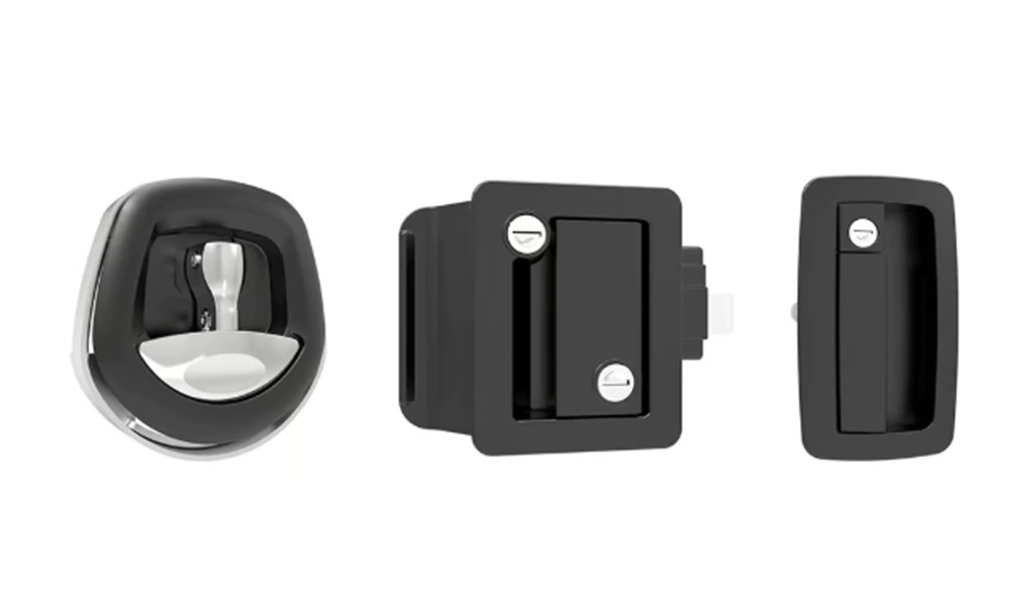
Walk alongside a commercial utility truck, a marine deck hatch, or a high-density server cabinet, and you will likely spot flush lever compression latches—widely known in the trade as trigger latches.
How the Mechanism Works: Pressing a recessed release button pops a contoured handle outward. When the operator pushes that handle back flush into the housing, an over-center mechanical linkage draws the rear pawl axially toward the door panel.
Where They Shine: Aerodynamics, snag prevention, and high clamping leverage. Because the handle sits completely flat when closed, nothing catches on passing equipment or operator clothing. The lever arm also multiplies hand force, allowing technicians to compress stiff EPDM or silicone gaskets effortlessly.
The Trade-Off: Panel preparation. Most flush lever latches require a rectangular cutout rather than a simple round hole, meaning your sheet-metal shop needs laser cutting or dedicated stamping punches.
2. Lift-and-Turn Compression Latches
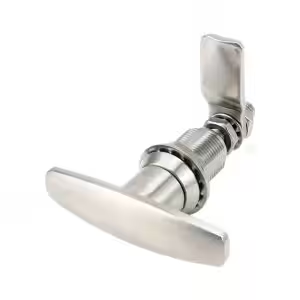
For heavy steel doors on HVAC chillers, agricultural equipment, and large generator enclosures, operators need serious leverage and an unmistakable visual cue that the door is actually sealed. That is the job of the lift-and-turn compression latch.
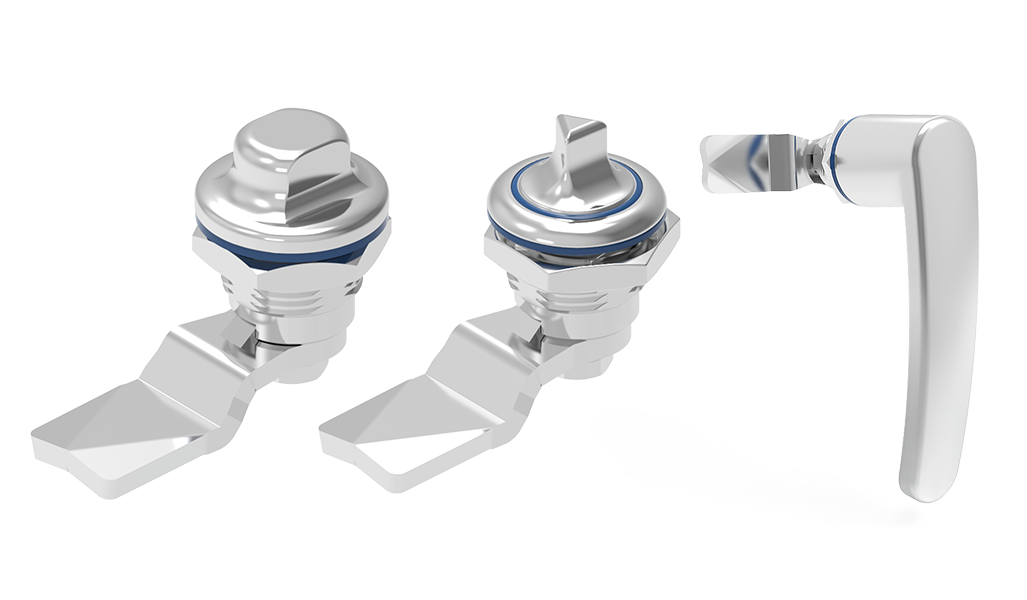
How the Mechanism Works: Lifting a T-handle or L-handle out of its housing rotates the pawl 90 degrees behind the frame strike. Folding the handle back down drives a cam-follower pin that pulls the pawl straight back, clamping the door against the gasket.
Where They Shine: Ergonomics and visual safety verification. Technicians wearing thick work gloves can operate a T-handle easily, and supervisors can tell from across a factory floor if a cabinet is unlatched simply by seeing a raised handle.
The Trade-Off: Interior swing clearance. You need enough room behind the door frame for the rotating pawl and spindle assembly without encroaching on live electrical busbars or mounted components.
3. Vise-Action (Single-Turn) Compression Latches
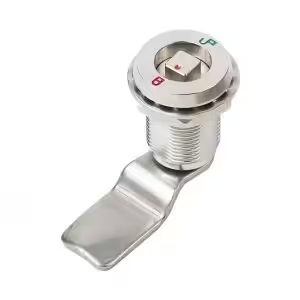
In rail transit cabinets, medical diagnostic equipment, and washdown food-processing boxes, protruding handles are often banned for safety or tamper reasons, yet operators still need fast, repeatable sealing. Vise-action compression latches accomplish both in a single continuous motion.
How the Mechanism Works: Driven by a key cylinder, hex socket, or railway square tool, a single 180-degree turn follows an internal helical cam track. The first 90 degrees swings the pawl behind the frame; the second 90 degrees pulls the pawl axially upward—typically around 6 mm (0.24″)—to compress the seal.
Where They Shine: Speed and gasket preservation. Because the pawl moves into position before pulling straight back, it never drags sideways across the frame, preventing premature elastomer tearing over thousands of cycles.
The Trade-Off: Localized stress on thin panels. The helical track converts modest wrist torque into high axial clamping force; on thin-gauge aluminum or steel doors, adding a return flange around the cutout prevents metal dimpling.
4. Threaded Cam Compression Latches (Key & Tool Operated)
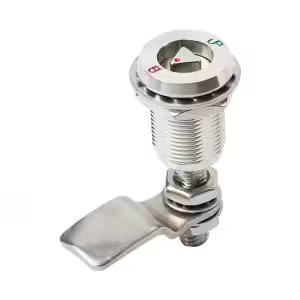
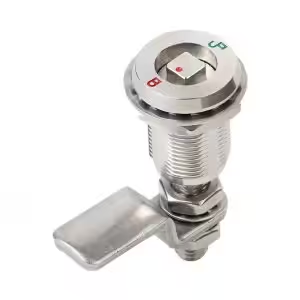
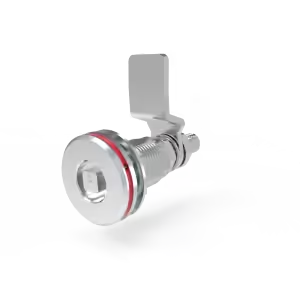
If you need vibration-resistant clamping inside the compact footprint of a standard quarter-turn lock, threaded cam compression latches bridge that gap without forcing a cabinet redesign.
How the Mechanism Works: Mounted in a standard single round or double-D cutout, turning the key or slotted driver rotates the pawl behind the frame until it hits an internal stop. Continued rotation drives the pawl upward along a threaded spindle, pulling the door tight against the frame.
Where They Shine: Drop-in retrofits and tight space envelopes. For roadside electrical distribution boxes and outdoor telecom shelters, upgrading to a threaded compression latch stops door rattle and water ingress using your existing cutout tooling.
The Trade-Off: Slower actuation. Winding a threaded shaft takes more turns than snapping an over-center lever shut, making these better suited for scheduled maintenance access rather than doors opened dozens of times a day.
5. Adjustable-Grip vs. Fixed-Grip Compression Latches
Beyond how you actuate the handle, every compression latch falls into one of two structural categories based on how it handles real-world sheet-metal tolerances:
| Selection Factor | Adjustable-Grip Compression Latches | Fixed-Grip Compression Latches |
| How Grip Is Set | A threaded spindle with locknuts or a stepped pawl lets technicians dial in the exact grip range. | Pre-determined axial travel engineered for a fixed door-to-frame stack-up. |
| Best Application Fit | Welded frames with minor warpage, thick powder-coated panels, or gaskets that compress over time. | High-volume CNC-punched enclosures with tight, repeatable sheet-metal tolerances. |
| Production Line Impact | Prevents assembly bottlenecks when frame tolerances drift; allows field re-tensioning. | Faster out-of-the-box installation with zero manual calibration on the assembly floor. |
Three Practical Checks Before Finalizing Your Latch Spec
Even when you pick the right latch style, small dimensional oversights can derail prototype testing:
Measure Compressed Gasket Height: Always calculate your required grip range using the compressed thickness of the perimeter gasket (typically 25% to 35% compression), never its free uncompressed height. Specifying to uncompressed dimensions results in a latch that either refuses to close or bends its pawl under overload.
Verify Shaft Sealing for IP65 / NEMA 4: Clamping the door perimeter tightly means little if rainwater leaks straight through the keyway or spindle. For outdoor washdown or coastal enclosures, confirm the latch housing integrates internal O-ring shaft seals and a flange gasket.
Match Materials to the Environment: Standard zinc alloy with powder coating performs reliably on indoor switchgear and sheltered machinery, whereas coastal telecom, marine, and chemical cabinets demand passivated 304 or 316 stainless steel to prevent pitting and galvanic corrosion.
Tailoring Compression Latches to Your Enclosure with CUYUE
Off-the-shelf catalog latches work well for standard sheet-metal gauges, but real-world enclosure projects frequently introduce non-standard door offsets, double-walled insulated panels, or strict unit-cost targets.
At CUYUE, we operate as a comprehensive industrial locking hardware manufacturer dedicated to cabinet locks, industrial hinges, and handles. By integrating in-house product R&D, mold and tooling development, manufacturing, and product testing verification under one roof, our engineering team helps equipment manufacturers move seamlessly from custom pawl offsets and bespoke key codes to validated mass production—delivering consistent quality, faster lead times, and disciplined cost control across your entire enclosure hardware system.
Evaluating latch options for an upcoming cabinet or machinery platform? Share your panel thickness, gasket profile, and environmental sealing targets with the CUYUE engineering team for tailored latch recommendations and sample validation.