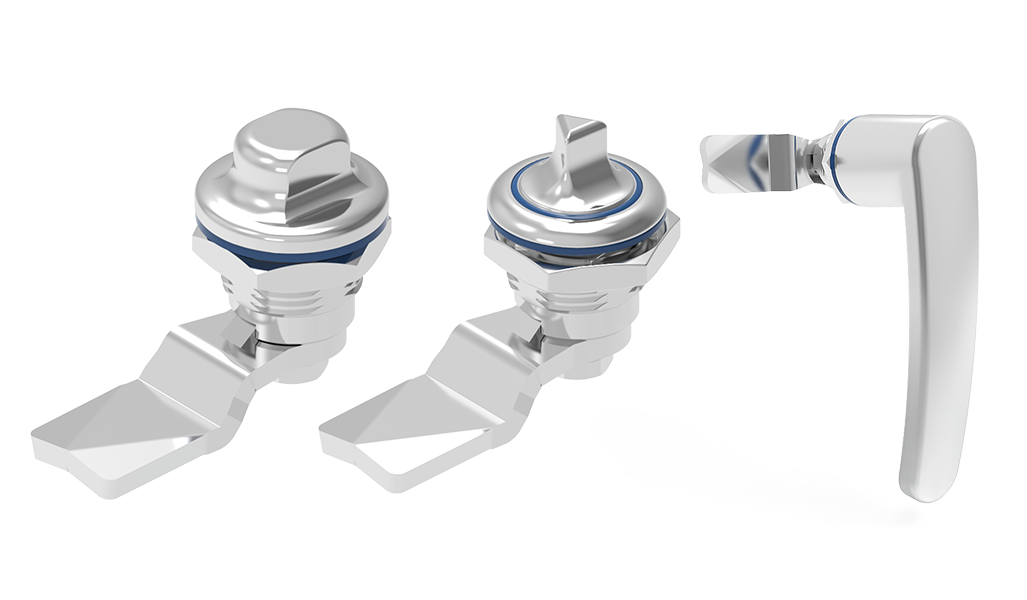





If you have ever stood beside a running backup generator or opened a roadside electrical cabinet after a week of heavy rain, you already know where standard latches fail. A conventional quarter-turn lock only rotates a flat bar behind the door frame—it holds the panel closed, yet leaves just enough play for sheet metal to rattle and moisture to sneak past the rubber seal.
That exact failure mode is why enclosure engineers specify compression latches. Instead of simply blocking a door from swinging open, a compression latch separates rotation from clamping: it first moves a pawl into position behind the frame, then pulls that pawl straight back toward the door face. That axial pull-up force squeezes the perimeter gasket uniformly, locking out dust and washdown water (IP65 / NEMA 4) while silencing harmonic vibration.
At CUYUE, our R&D and product testing engineers spend every week reviewing customer enclosure prototypes—from telecom shelters to off-highway machinery canopies. One of the most common spec mistakes we see isn’t failing to use a compression latch; it is picking the wrong type of compression mechanism for the operator’s workflow or the cabinet’s physical envelope.
Here is a practical field breakdown of the main types of compression latches, how their internal mechanics differ, and where each design earns its keep.
1. Flush Lever (Trigger) Compression Latches
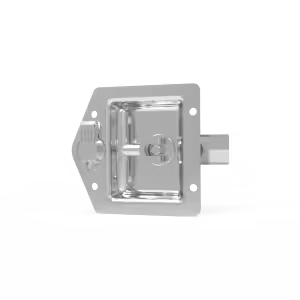
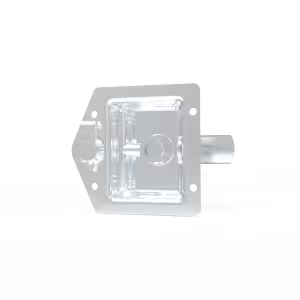
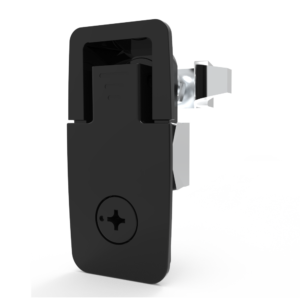
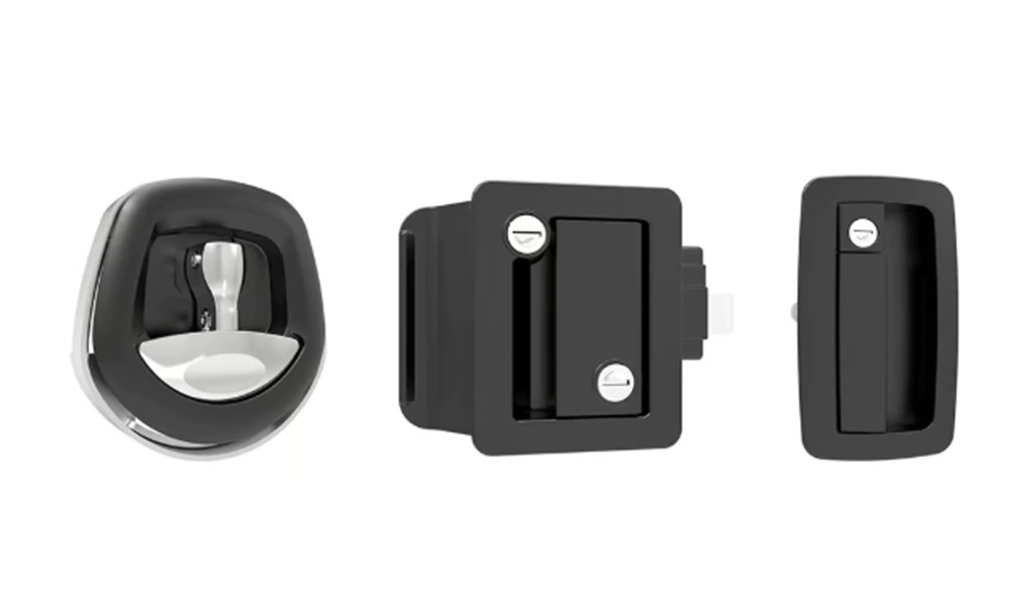
Walk past a modern utility service truck, a marine deck hatch, or a high-density server rack, and you will almost certainly see flush lever compression latches—widely referred to in the industry as trigger latches.
How They Operate: Pressing a small recessed release button pops a contoured lever out from the housing. Pushing that lever back flush against the door panel actuates an over-center mechanical linkage, drawing the rear pawl axially inward.
Best Use Cases: Anywhere snag hazards, aerodynamics, or clean aesthetics matter. Because the handle sits completely flat when latched, nothing catches on passing forklifts, tool belts, or brush. The lever arm also multiplies hand leverage, letting technicians compress thick EPDM or silicone gaskets without straining their wrists.
Design Trade-Off: Panel cutout complexity. Unlike round-hole latches that only require a simple punch, flush lever housings typically need a rectangular cutout—something to factor into your laser-cutting or stamping workflow early.
2. Lift-and-Turn Compression Latches
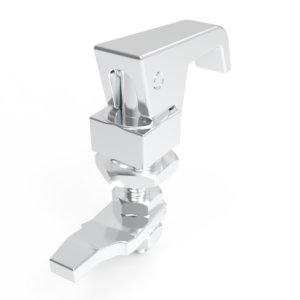
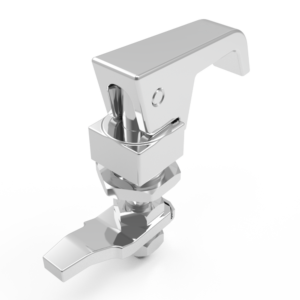
On heavy steel doors for HVAC chillers, agricultural tractors, and industrial generator enclosures, technicians need serious mechanical leverage and unmistakable visual confirmation that the door is sealed. That is the role of the lift-and-turn compression latch.
How They Operate: Lifting a T-handle or L-handle from its housing rotates the pawl 90 degrees behind the frame strike. Folding the handle back down drives a cam-follower pin that pulls the pawl straight back, clamping the door tight against the seal.
Best Use Cases: Outdoor utility boxes, cold-weather machinery where operators wear heavy work gloves, and large panels where supervisors want to see from fifty feet away whether a cabinet is unlatched (a raised T-handle immediately signals an unsealed door).
Design Trade-Off: Interior clearance. Always verify that live electrical busbars, DIN rails, or cable trays inside the cabinet leave enough room for the rotating pawl and spindle assembly.
3. Vise-Action (Turn-to-Compress) Compression Latches
In railway rolling stock, medical diagnostic housings, and washdown food-processing cabinets, exposed levers can pose safety or tamper risks, yet maintenance crews still need fast, single-motion sealing. Vise-action compression latches solve both problems in one continuous half-turn.
How They Operate: Using an internal helical cam track, a single 180-degree rotation of a key cylinder, hex socket, or railway square tool executes two steps automatically: the first 90 degrees swings the pawl behind the frame, and the second 90 degrees pulls the pawl axially upward—typically by about 6 mm (0.24″)—to compress the gasket.
Best Use Cases: High-vibration transit equipment and tight-security enclosures. Because the pawl moves into position before pulling straight back, it never drags sideways across the frame, eliminating sliding abrasion on the rubber seal over thousands of cycles.
Design Trade-Off: Localized stress on thin panels. The helical track converts modest wrist torque into high axial clamping load; on thin-gauge aluminum or sheet steel, adding a return flange around the cutout prevents metal dimpling.
4. Threaded Cam Compression Latches (Key & Tool Operated)
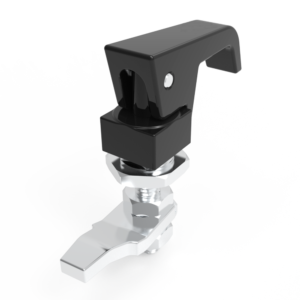
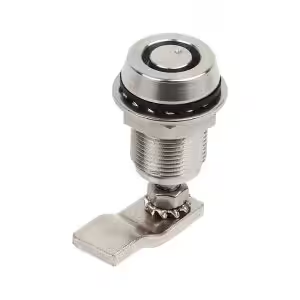
When an existing cabinet uses standard quarter-turn locks that are rattling loose or leaking water, threaded cam compression latches offer a clean drop-in upgrade without redesigning the sheet-metal door.
How They Operate: Mounted inside a standard round or double-D cutout, turning the key or slotted driver swings the pawl behind the frame until it meets an internal stop. Continued rotation drives the pawl upward along a threaded spindle, clamping the door panel firmly against the gasket.
Best Use Cases: Roadside electrical distribution boxes, telecom enclosures, and compact control panels where panel real estate is tight and tamper resistance is essential.
Design Trade-Off: Actuation speed. Winding a threaded shaft takes more turns than snapping an over-center trigger lever closed, making these ideal for periodic service access rather than doors opened dozens of times per shift.
5. Adjustable-Grip vs. Fixed-Grip Compression Latches
Beyond handle style and actuation, every compression latch falls into one of two structural categories based on how your production line handles sheet-metal tolerances:
| Selection Factor | Adjustable-Grip Compression Latches | Fixed-Grip Compression Latches |
| Grip Adjustment | A threaded spindle with locknuts or a stepped pawl lets technicians dial in the exact grip range. | Pre-set axial pull-up stroke built for a specific door-to-frame dimension. |
| Where It Fits Best | Welded frames with slight warpage, heavy powder-coated panels, or gaskets that compress over time. | High-volume CNC-punched enclosures with tight, repeatable sheet-metal tolerances. |
| Assembly Line Impact | Prevents line stoppages when frame stack-up varies; allows easy field re-tensioning. | Faster out-of-the-box installation with zero manual calibration required on the line. |
Three Practical Checks Before You Finalize a Latch Spec
Even when you choose the right compression latch family, three small oversights routinely derail prototype testing:
Calculate Grip Range Using Compressed Gasket Height: Always measure your grip range—the distance from the outer face of the door panel to the inner latching surface of the frame—with the perimeter gasket compressed (typically 25% to 35% of its free height), never uncompressed. Specifying to an uncompressed seal leaves the latch unable to close or bends the pawl under overload.
Verify Shaft Sealing for IP65 / NEMA 4: Squeezing the door gasket means little if rainwater leaks straight through the keyway or spindle. For outdoor washdown or coastal cabinets, confirm the latch includes internal O-ring shaft seals and an under-bezel flange gasket.
Match Materials to the Operating Environment: Powder-coated zinc alloy delivers strong load capacity and cost efficiency for sheltered industrial switchgear, whereas coastal telecom cabinets, marine hatches, and chemical enclosures demand passivated 304 or 316 stainless steel to prevent pitting and galvanic corrosion.
Partnering with CUYUE for Industrial Locking Hardware Solutions
While standard catalog latches work for basic sheet-metal enclosures, demanding equipment projects often call for tailored hardware that balances strict quality standards, fast lead times, and disciplined cost control.
At CUYUE, we are a comprehensive industrial locking hardware manufacturer backed by a dedicated R&D and design team, specializing in cabinet locks, industrial hinges, and handles. With complete in-house product R&D, mold development, manufacturing, and product testing and verification capabilities, we provide end-to-end industrial locking system solutions built to meet growing customer demands for consistent quality, rapid delivery, customization, and cost efficiency.
Looking for reliable compression latches or complete enclosure hardware solutions? Contact the CUYUE team to discuss your cabinet lock, hinge, and handle requirements.