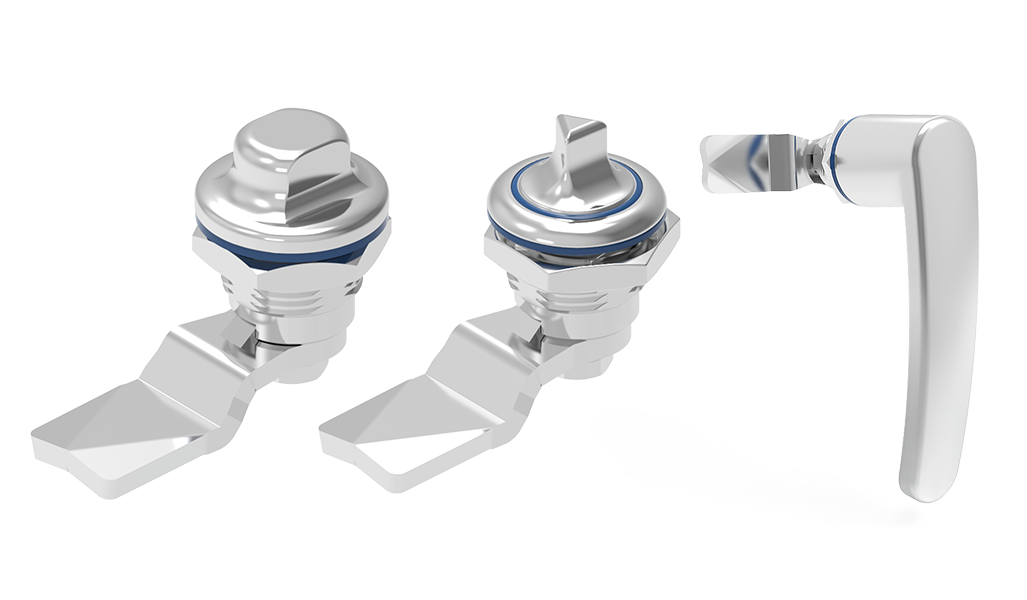





In industrial hardware design, plant engineering, and enclosure manufacturing, the terms latch and lock are frequently used interchangeably. However, mistaking one for the other can lead to severe compliance failures, inadequate environmental sealing, or compromised physical security.
At its core, the difference comes down to retention versus restriction: a latch holds a door shut against wind, vibration, or gasket pressure, while a lock restricts unauthorized access using a key, combination, or electronic credential.
Understanding this distinction is vital for engineers designing electrical control panels, HVAC units, telecommunication racks, and machinery housings.
Side-by-Side Comparison: Latch vs. Lock
| Feature / Mechanical Aspect | Industrial Latch (e.g., Cam Latch, Compression Latch) | Industrial Lock (e.g., Swinghandle, Keyed Cylinder Lock) |
| Primary Function | Keeps a panel or door securely closed against frame forces | Restricts access and prevents unauthorized opening |
| Access Control | Operates via manual push, pull, turn, or tool (wing knob, hex) | Requires a mechanical key, pad-lock shackle, or electronic signal |
| Security Level | Low to moderate (prevents accidental opening and vibration) | Medium to high (protects against tampering and theft) |
| Gasket & Sealing Support | High (compression latches pull doors tight to maintain IP ratings) | Varies; often paired with a multi-point rod system for sealing |
| Typical Applications | Access panels, duct doors, routine service enclosures | Outdoor server cabinets, utility boxes, high-voltage switchgear |
1. What Is a Latch? (Focus: Retention & Operational Efficiency)
A latch is a mechanical fastener designed to hold a movable barrier (like a cabinet door or hatch) closed against a frame. It does not inherently prevent someone from opening the door; it simply keeps the door from swinging open spontaneously.
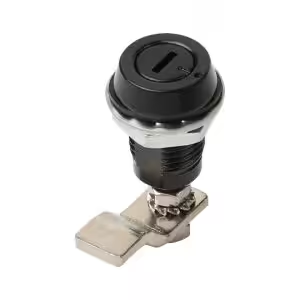
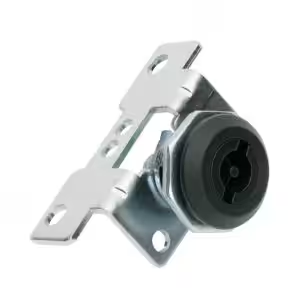
Common Types: Quarter-turn cam latches, slam latches, draw latches, and heavy-duty compression latches.
Engineering Purpose: In industrial environments, latches are engineered to combat dynamic forces. For instance, a compression latch uses axial pull-up force to squeeze rubber or foam gaskets, ensuring the enclosure meets IP65 or NEMA 4 dust and water-ingress standards.
User Interaction: Operators can usually open a latch instantly via a quarter-turn tool insert (slot, square, triangle), a wing knob, or a lift-and-turn lever, making it ideal for frequent maintenance access.
2. What Is a Lock? (Focus: Security & Access Restriction)
A lock incorporates a locking mechanism—such as a pin-tumbler cylinder, a DIN cylinder, a pad-lockable hasp, or an electronic solenoid—that prevents the actuator from moving until an authorized credential is provided.
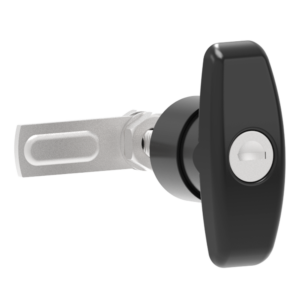
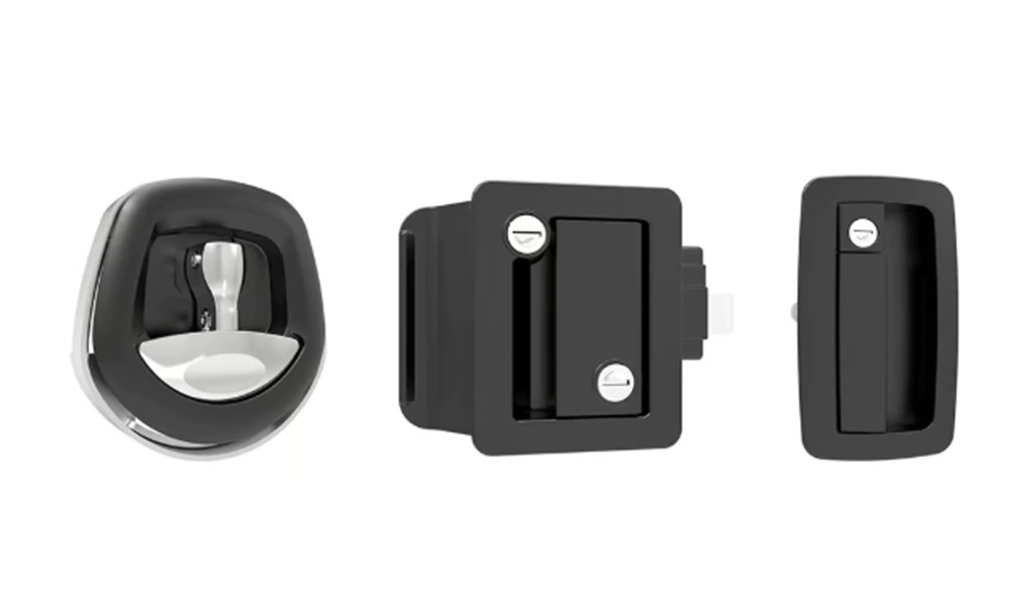
Common Types: Key-locking swinghandles, electronic cabinet locks, and cam locks with integrated key cylinders.
Engineering Purpose: Locks are deployed where asset protection, safety compliance, or liability prevention is paramount. They safeguard sensitive electrical components, proprietary data servers, and hazardous industrial machinery from tampering or theft.
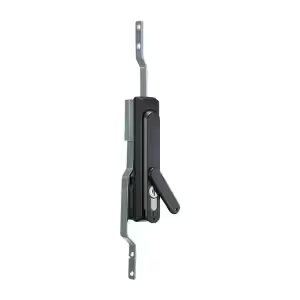
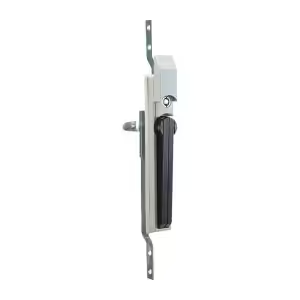
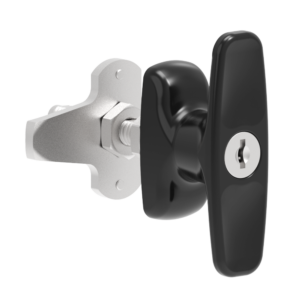
The Hybrid Reality: In modern industrial design, latches and locks are frequently combined. A compression swinghandle, for example, acts as a high-performance mechanical latch to seal the door, but it also features a built-in key cylinder to lock the handle down when closed.
3. How to Choose Between a Latch and a Lock for Your Enclosure
When specifying hardware for a new enclosure design, procurement and engineering teams should evaluate three operational factors:
Environmental vs. Security Priorities: If your primary challenge is preventing rain, dust, or vibration rattle on an outdoor machine, prioritize a high-retention compression latch or multi-point rod system. If the enclosure sits in a public area or data center, a secure locking mechanism is mandatory.
Maintenance Frequency: Enclosures that require daily technician access benefit from tool-operated or quick-release latches rather than complex keyed locks, reducing service downtime.
Multi-Point Scaling: Large industrial cabinets (over 1,200 mm tall) often require a central locking handle that drives upper and lower rods to latch the door securely at multiple points, preventing corner warping and gasket leaks.
Customizing Industrial Locking and Latching Solutions with CUYUE
At CUYUE, we recognize that every industrial enclosure has unique structural tolerances, security standards, and environmental challenges. As a comprehensive hardware manufacturing enterprise specializing in cabinet locks, hinges, and handles, we maintain an elite in-house R&D and industrial design team.
From precision mold development and advanced die-casting to CNC machining and rigorous lifecycle testing, CUYUE controls the entire manufacturing pipeline. Whether you need a standard stainless steel cam latch, a custom compression swinghandle, or a fully integrated multi-point locking system tailored to your exact panel cutout and IP rating requirements, we deliver robust solutions with rapid lead times and strict cost control.
Looking to optimize the latches and locks on your next cabinet line? Contact CUYUE’s engineering team today to discuss custom specifications, request technical drawings, or evaluate sample prototypes.