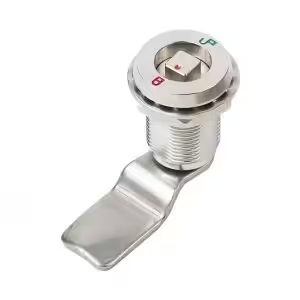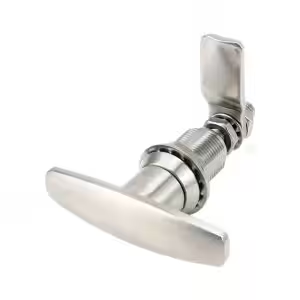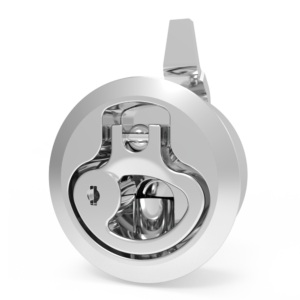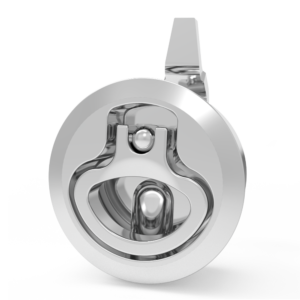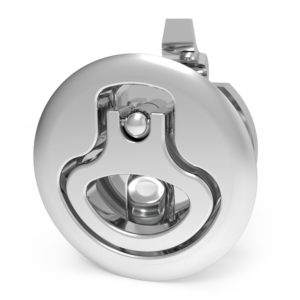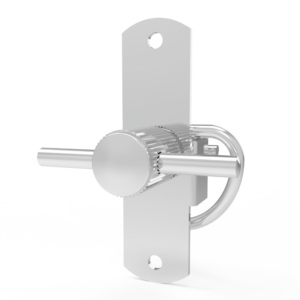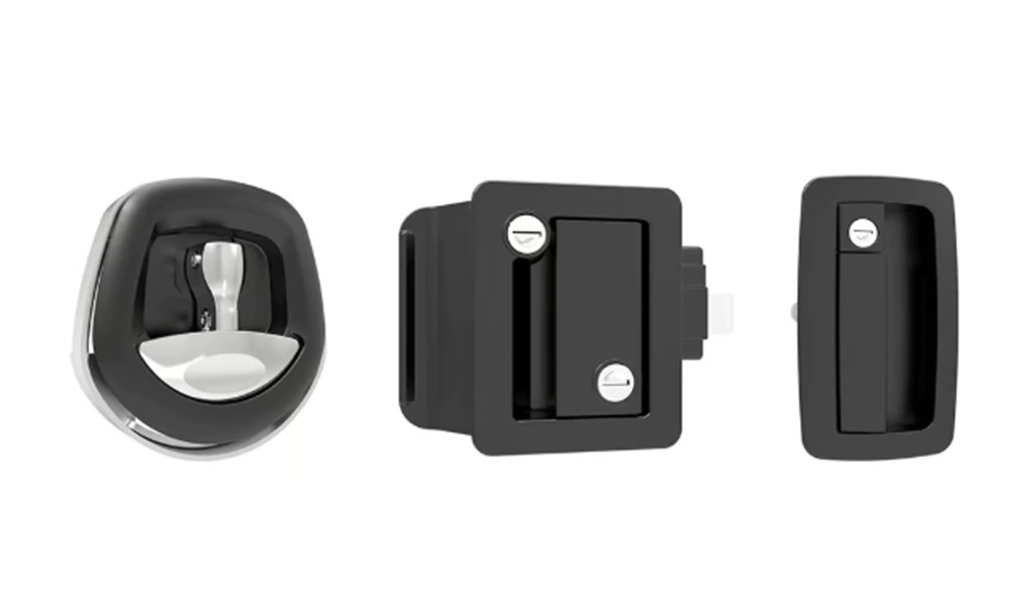
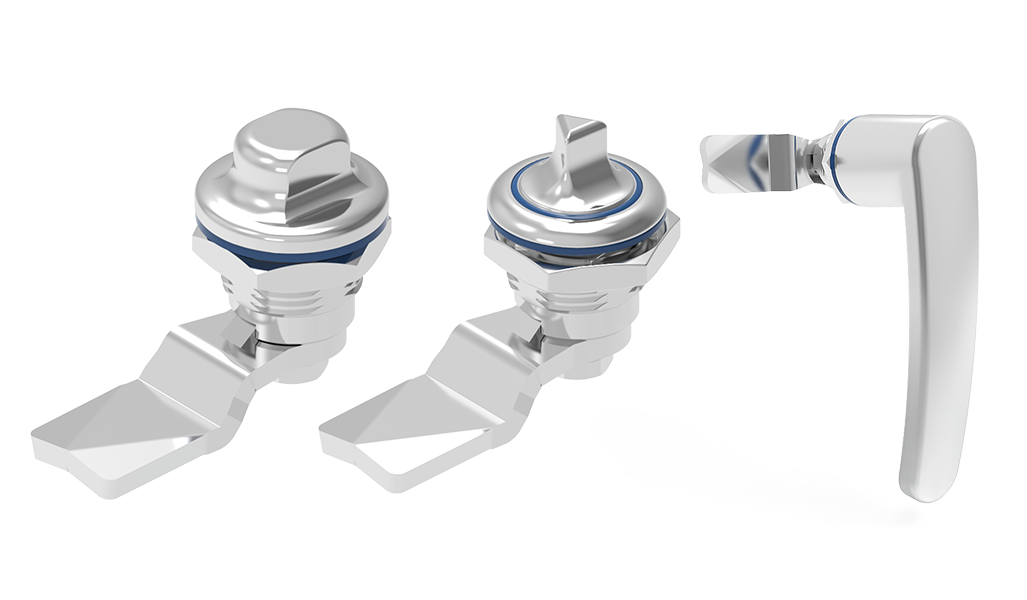





Yes—for industrial enclosures, heavy machinery, and high-vibration environments, a compression latch is significantly stronger and more reliable than a standard liner lock (or simple spring-loaded cam latch). While a liner lock relies on lateral leaf-spring tension to hold a blade or light panel in place, a compression lock generates active axial clamping force that pulls the door tightly against the frame gasket, eliminating rattle, preventing accidental disengagement under shock, and achieving IP65/NEMA 4 environmental sealing.
At CUYUE, our R&D and tooling engineering teams test hundreds of latching mechanisms under cyclic vibration and pull-force loads every year. Understanding the mechanical difference between these two locking architectures is critical when specifying hardware for electrical cabinets, HVAC units, rail transit, and off-highway equipment.
The Mechanical Difference: Axial Clamping vs. Lateral Tension
To evaluate sheer strength, you have to look at how each mechanism distributes mechanical load and resists failure.
How a Compression Lock Works
A compression latch operates in two distinct mechanical stages:
Engagement: Turning the handle, key, or hex actuator rotates the pawl behind the frame strike.
Compression (Pull-Up): Continued actuation—or a secondary cam-over-center lever action—pulls the pawl axially toward the door face.
This over-center cam geometry creates a mechanical lock that cannot back off on its own. Even under severe multi-axis vibration, the clamping force compresses the EPDM or silicone perimeter gasket, turning the door, gasket, and enclosure frame into a single rigid structure.
How a Liner Lock Works
Originally popularized in folding knives and adapted into light-duty access panels, a liner lock uses a split metal leaf spring (the liner) that flexes laterally behind the tang or catch when closed.
Load Path: All shear and shock loads transfer directly through the thin edge of the leaf spring.
Failure Mode: Under heavy impact, prying torque, or sustained harmonic vibration, the leaf spring can flex backward, buckle, or slip off the mating surface—causing sudden, catastrophic disengagement.
Head-to-Head Comparison: Compression Lock vs. Liner Lock
| Performance Metric | Industrial Compression Lock | Standard Liner Lock / Spring Latch |
| Primary Force Vector | Axial pull-up clamping (pulls door into frame) | Lateral spring tension (blocks movement) |
| Vibration & Shock Resistance | High (over-center lock prevents rattle & back-out) | Low to Moderate (prone to spring fatigue & slip) |
| Environmental Sealing | IP65 / IP66 / NEMA 4 (active gasket compression) | Minimal / Non-sealed (zero gasket pull-up) |
| Static Tensile Load Capacity | Up to 1,500 N – 3,500 N+ (depending on alloy/size) | Typically under 300 N – 500 N |
| Gasket Wear & Tear | Low (vertical pull-up avoids sliding friction) | High (pawl drags across frame/gasket) |
| Ideal Applications | Telecom cabinets, generators, marine, rail, EV battery boxes | Light indoor panels, handheld gear, non-sealed covers |
3 Engineering Reasons Compression Latches Outperform in Industrial Applications
When B2B buyers and enclosure engineers ask us whether upgrading from a basic latch to a compression latch is worth the tooling or unit cost, our lab testing consistently points to three structural advantages:
1. Zero-Friction Gasket Compression (IP65 & NEMA 4 Compliance)
Standard cam locks and spring latches sweep across the frame, dragging the gasket sideways and accelerating elastomer tear. A lift-and-turn or trigger compression latch moves the pawl into position first, then pulls straight back. This uniform gasket compression blocks dust, washdown water, and EMI/RFI interference without chewing up the seal.
2. Immunity to Harmonic Vibration
In diesel generators, commercial vehicles, and railway cabinets, constant low-frequency vibration slowly works standard threaded fasteners and leaf-spring locks loose. Because a heavy-duty compression latch locks past its mechanical center point, external vibration actually reinforces the wedging angle rather than vibrating it open.
3. Structural Rigidity Across Large Door Spans
On tall electrical switchgear cabinets or server racks, a door that isn’t tightly clamped flexes under wind load or accidental impact. Installing multi-point or dual flush compression latches pre-loads the door perimeter, effectively turning the door panel into a load-bearing structural member.
When Should You Choose a Liner Lock Instead?
Despite the superior strength of compression latches, over-engineering adds unnecessary cost if your application doesn’t demand it. A liner lock or simple spring-loaded snap latch makes sense when:
The enclosure sits in a climate-controlled indoor environment with zero vibration.
Dust and water ingress protection (IP ratings) are not required.
Space behind the panel (grip range / protrusion depth) is too tight to accommodate a compression cam mechanism.
Customizing Compression Latches for Your Enclosure: The CUYUE Advantage
Off-the-shelf latches rarely match every sheet-metal gauge, grip range, or corrosion requirement out of the box. At CUYUE, we operate as an integrated industrial hardware manufacturer—combining in-house R&D, precision mold and tooling development, die-casting/CNC manufacturing, and physical load-testing labs under one roof.
Whether you need 316 stainless steel compression latches for marine salt-spray resistance, black powder-coated zinc alloy trigger latches for generator canopies, or custom-bent pawls tailored to a non-standard door thickness, our engineering team controls every step from CAD prototype to mass production—ensuring faster lead times, strict batch consistency, and optimized unit costs.
Need help specifying the right grip range or load rating for your cabinet design? Contact CUYUE’s engineering team with your panel thickness and sealing requirements for custom OEM lock solutions and sample validation.