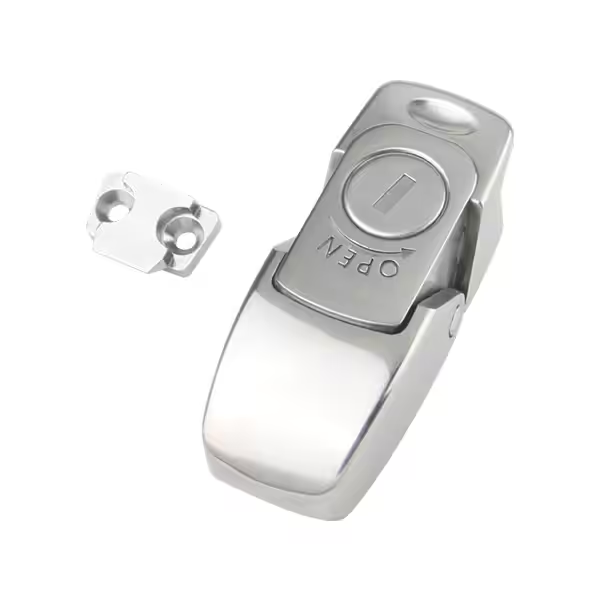
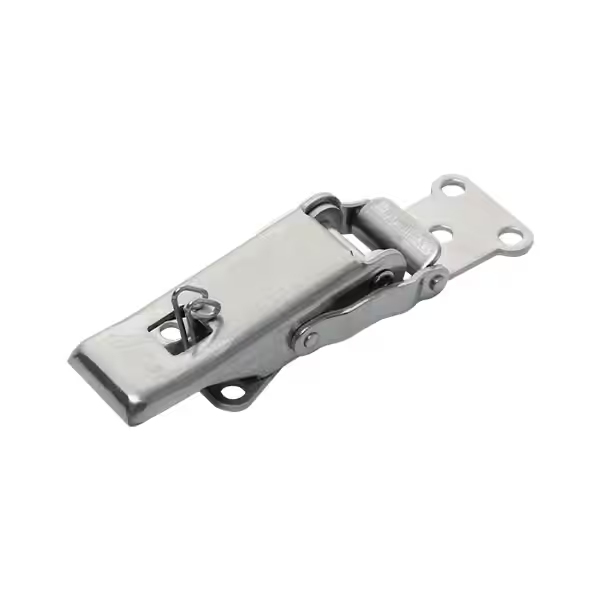
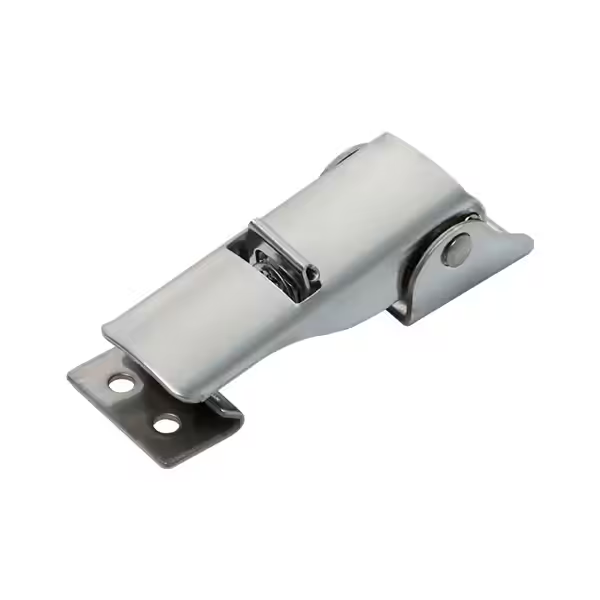
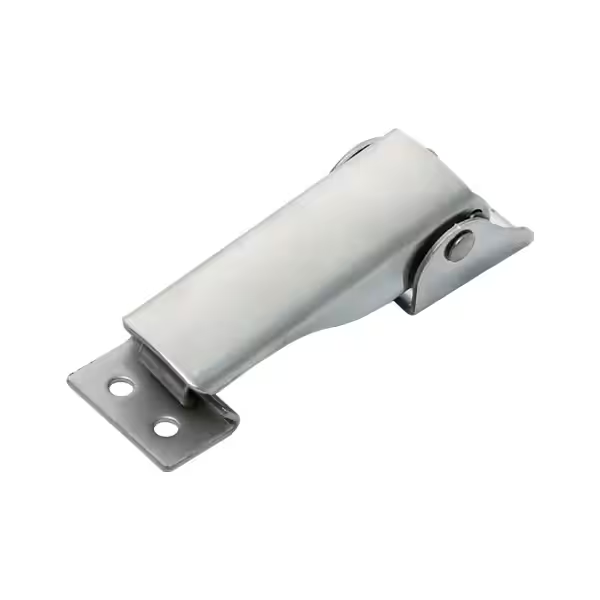
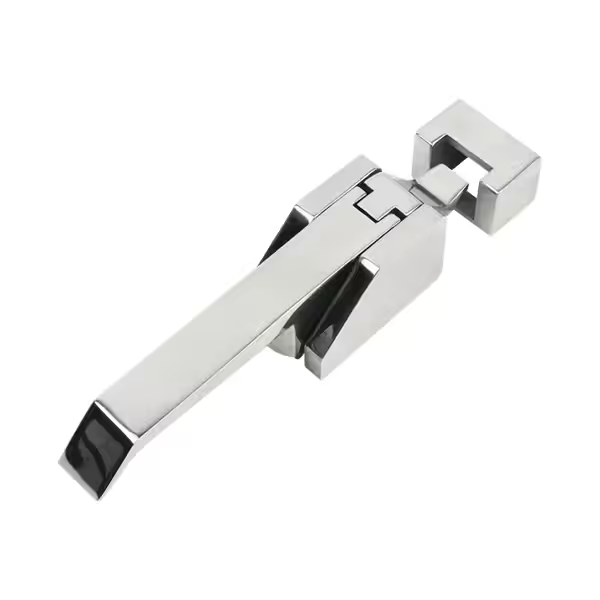
Draw latches provide a wide range of solutions to pull panels together firmly. There are many types of CUYUE pull locks, including eccentric, adjustable and heavy ones. The pull locks have mechanical advantages by allowing manual generation of the force required to compress the gasket, seal the housing and eliminate the rattle.
Pull the door panels together and securely fasten them
Mechanical advantages that compress the seal and ensure a good seal
Easy to select and install
Multiple size and strength options available
Materials and finishes suitable for any environment
A draw latch uses a mechanical leverage mechanism to pull two jointed panels or lids tightly together and hold them under tension.
What is the difference between a flexible rubber draw latch and a metal draw latch?
Flexible rubber draw latches absorb vibration and forgive panel misalignment, whereas metal draw latches offer higher load capacities and rigid clamping force.
How does an over-center draw latch work?
An over-center draw latch rotates a handle past a mechanical pivot point, locking the mechanism in place under continuous tension to prevent accidental opening.
What are spring-loaded draw latches used for?
Spring-loaded draw latches feature internal springs that absorb dynamic shocks, compensate for seal wear, and accommodate thermal expansion.
Where are draw latches most commonly used?
They are widely installed on transit cases, HVAC units, industrial equipment enclosures, toolboxes, marine hatches, and off-road vehicles.
Are draw latches available with key locking or padlocking security?
Yes, draw latches are available with integrated key lock cylinders, padlock loops, or secondary safety catches to prevent unauthorized access.
Which material is best for draw latches in harsh or marine environments?
304 and 316 stainless steel offer maximum tensile strength and superior corrosion resistance for marine, outdoor, and washdown applications.
How do you adjust the tension on an adjustable draw latch?
Thread the latch blade or keeper loop clockwise or counterclockwise to adjust the reach distance and fine-tune gasket compression.
What is the difference between surface-mount and concealed draw latches?
Surface-mount latches fasten directly onto panel exteriors for easy access, while concealed draw latches hide mounting hardware behind or under the mechanism for a flush exterior.
How do I select the right draw latch for my application?
Choose a draw latch based on required tensile load capacity, joint clearance, panel alignment tolerance, material finish, and locking security needs.