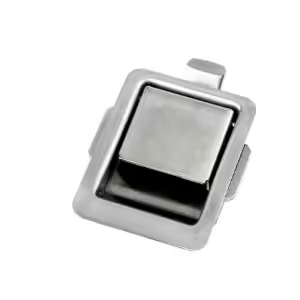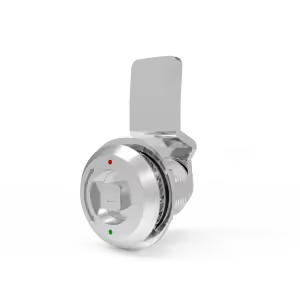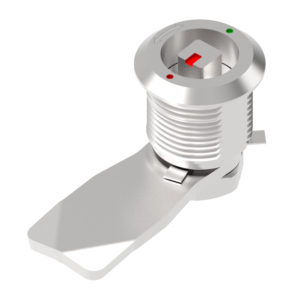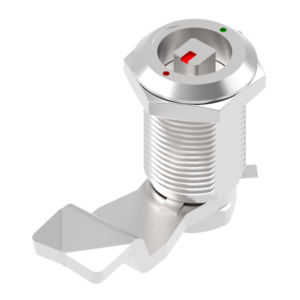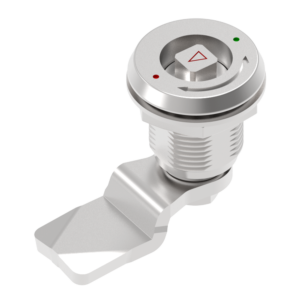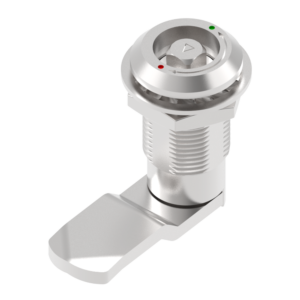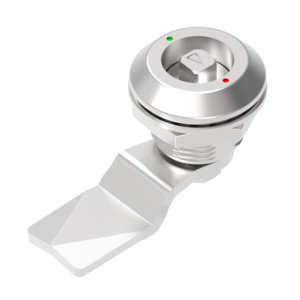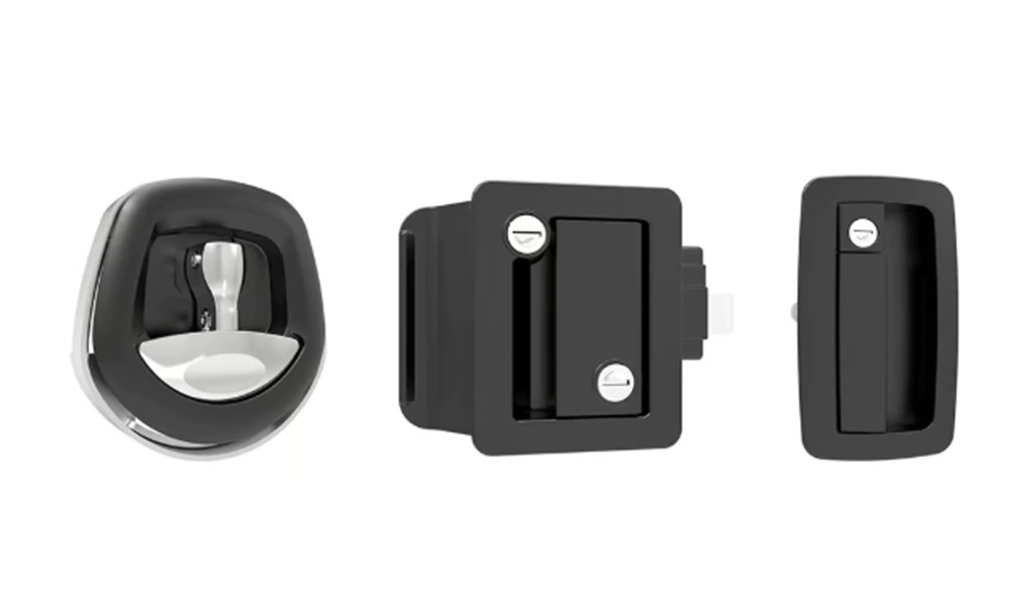
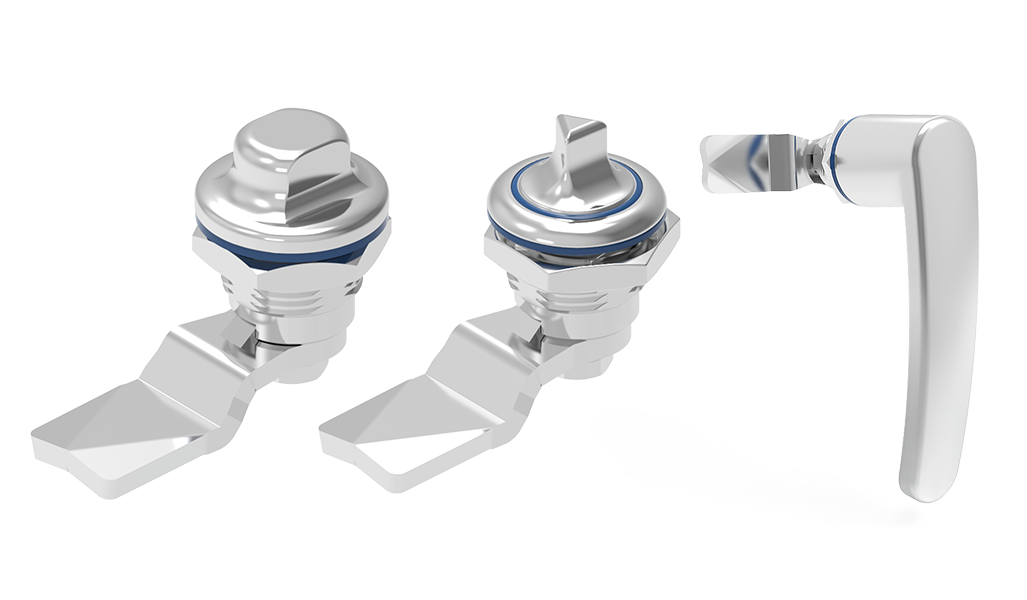





The key difference between a cam latch and a compression latch lies in how force is applied after the latch engages the frame. A cam latch relies purely on rotational motion—turning a pawl behind the door frame to hold a panel closed—while a compression latch converts that rotational or lever motion into axial pull-up force, physically drawing the door tighter against the cabinet frame to compress a weatherproof gasket.
Many engineers and procurement teams treat these two industrial hardware components as interchangeable because they often share similar panel cutouts and key-locking housings. In practice, choosing a standard cam latch for a high-vibration or outdoor enclosure is one of the fastest ways to compromise IP65/NEMA 4 environmental sealing and trigger premature door rattle.
Side-by-Side Comparison: Cam Latch vs. Compression Latch
How a Cam Latch Works (Rotational Fastening)
A cam latch—commonly referred to in the industry as a quarter-turn latch—is designed for straightforward mechanical retention. When you turn the actuator (using a key cylinder, slotted drive, square/triangular tool insert, or wing knob), the attached metal cam rotates 90 degrees behind the cabinet frame.
The Engineering Reality: The cam slides parallel to the inside surface of the frame. Because the cam does not move inward along the axis of the latch shaft, it cannot pull a warped door flat or squeeze a thick EPDM sponge gasket. If you want a tight seal with a standard cam latch, the operator has to physically push the door inward with their body weight while turning the key.
Where It Excels: When rapid access, simplicity, and cost control are the top priorities—such as indoor distribution panels, telecommunication racks, or light-duty metal cabinets—a stainless steel or zinc alloy cam latch delivers reliable, fast-acting security without unnecessary mechanical complexity.
How a Compression Latch Works (Rotational + Axial Pull-Up)
A compression latch solves the biggest limitation of a standard quarter-turn mechanism by separating latching from clamping.
Whether operated by a flush trigger lever, a T-handle, or a tool-operated cam cylinder, a compression latch operates in two distinct phases:
Engagement: The pawl swings 90 degrees behind the frame without rubbing against it.
Pull-Up Compression: Continuing the turn or depressing the lever retracts the pawl axially (typically between 3 mm and 6 mm of pull-up travel), pulling the door panel firmly into the perimeter gasket.
Eliminating Friction Wear: Because the pawl rotates into position before pulling tight, it avoids scraping against the frame during closure—preventing coating damage and metal shavings inside clean electrical cabinets.
Compensating for Tolerance Stack-Up: Sheet metal fabrication always carries slight dimensional tolerances, and rubber gaskets permanently compress over years of thermal cycling. Many industrial compression latches feature an adjustable grip range (using a threaded spindle and locknut), allowing assembly technicians to fine-tune the exact clamping tension on the production line.
3 Critical Engineering Factors to Decide Which One You Need
1. Gasket Compression and IP65 / NEMA 4 Ingress Protection
If your enclosure sits outdoors, on a factory floor with washdown cycles, or on a moving vehicle, a gasket alone will not stop water intrusion—it must be compressed by 25% to 40% of its original thickness to form a continuous barrier. A standard cam latch leaves uneven pressure points along the door edge, whereas a compression latch generates the mechanical leverage needed to maintain uniform gasket compression from top to bottom.
2. Vibration and Acoustic Dampening
In railway transportation, off-highway construction machinery, and generator enclosures, continuous harmonic vibration causes standard cams to chafe against the frame, creating high-pitched rattling and eventual structural fatigue. The sustained axial preload of a compression latch locks the door and frame into a rigid, rattle-free assembly.
3. Door Height and Multi-Point Latching Requirements
On small access panels (under 600 mm high), a single centrally mounted compression latch is usually sufficient. However, on tall outdoor switchgear cabinets or telecom shelters (over 1,200 mm), relying on a single center latch allows the top and bottom corners of the door to bow outward. In these designs, pairing a compression handle with a multi-point rod control system distributes clamping force evenly across the entire door height.
Customizing Industrial Latching Systems with CUYUE
At CUYUE, our dedicated R&D and industrial design team works directly with enclosure manufacturers to solve sealing, vibration, and ergonomics challenges across cabinet locks, hinges, and handles. Because we operate full in-house capabilities—from 3D mechanical engineering and precision mold development to die-casting, CNC machining, and laboratory lifecycle testing—we don’t force your cabinet design to fit a rigid catalog part.
Whether you need a 316 stainless steel compression latch salt-spray tested for marine environments, a custom cam offset for a non-standard panel thickness, or a complete multi-point locking system engineered for fast lead times and strict cost control, our engineers can customize the exact grip range, drive head, and surface finish to match your production requirements.
Need help verifying the right grip range or IP sealing rating for your enclosure? Contact CUYUE’s engineering team with your panel thickness and CAD cutout dimensions to request samples or a tailored hardware quote.