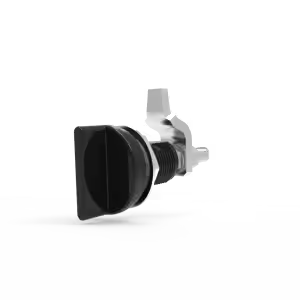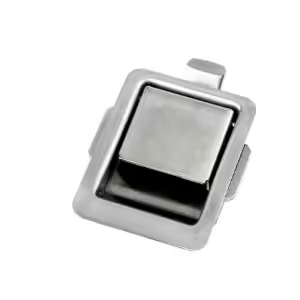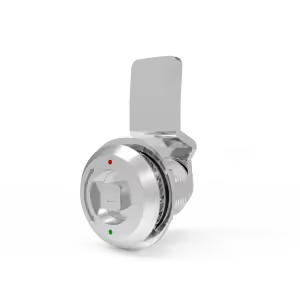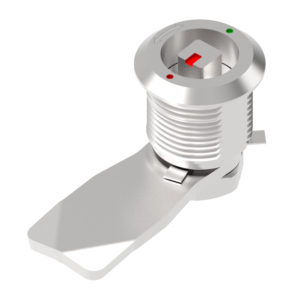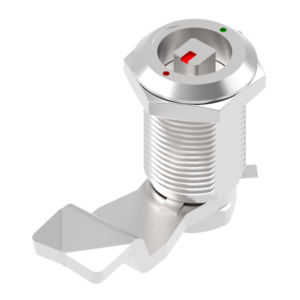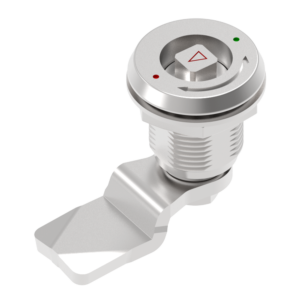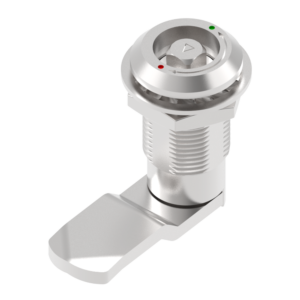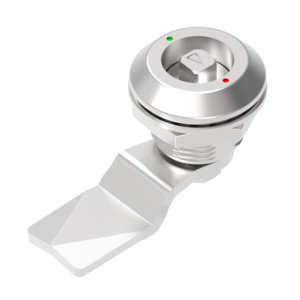





Selecting the right compression latch is critical for ensuring environmental sealing, vibration damping, and mechanical security in industrial cabinets, electrical enclosures, and heavy-duty equipment. Unlike standard cam locks or slam latches that merely hold a door closed, a compression latch pulls the door tightly against the frame—compressing the perimeter gasket to block dust, water ingress, and electromagnetic interference (EMI/RFI) while eliminating panel rattle.
For design engineers, enclosure fabricators, and OEM procurement managers, choosing the wrong latch leads to premature gasket failure, compromised NEMA or IP ratings, and costly field replacements. Below is a practical engineering framework for specifying the right compression latch for your application.
1. Understand How Compression Latches Work
A compression latch operates in two distinct stages during a single actuation cycle:
Latched Position: The pawl rotates behind the enclosure frame or keeper.
Compressed Position: Further actuation draws the pawl axially toward the door panel, pulling the door inward by a specified grip range (pull-up distance) to compress the weatherstripping or EMI gasket.
This axial pull-up action prevents metal-to-metal vibration, relieves stress on hinges, and maintains consistent seal pressure even across uneven door panels.
2. Six Key Technical Factors to Evaluate
A. Environmental Sealing & Ingress Protection (IP / NEMA Ratings)
If your cabinet operates outdoors, in washdown food-processing plants, or in dusty manufacturing floors, sealing is your top priority:
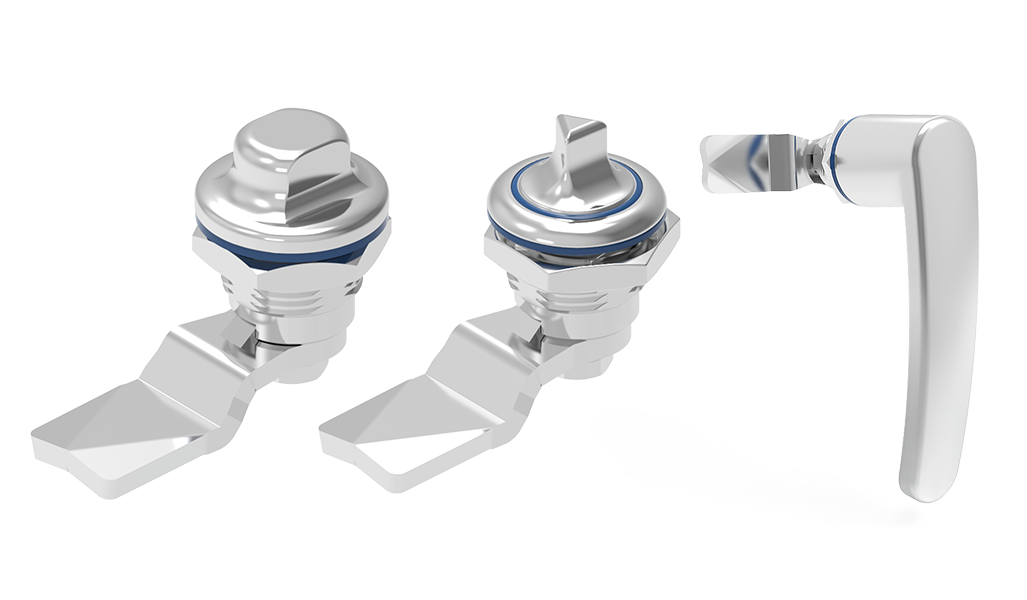
IP65 / IP66 & NEMA 4 / 4X Applications: Choose sealed compression latches equipped with internal O-rings, shaft seals, and flange gaskets. These prevent moisture and fine particulates from entering through the lock cylinder or actuator spindle.
Gasket Compression Ratio: Most elastomeric foam or EPDM gaskets require 25% to 30% compression to achieve a watertight seal. Ensure the latch’s axial pull-up distance (typically 4 mm to 6.5 mm) matches your gasket thickness.
B. Material Grade & Corrosion Resistance
The base metal and surface finish determine how well the hardware survives harsh operating environments:
| Material / Finish | Best Operating Environment | Key Advantages |
| 316 Stainless Steel | Marine, offshore, chemical processing, coastal outdoor cabinets | Superior resistance to chlorides, acids, and extreme saltwater corrosion |
| 304 Stainless Steel | Food & beverage machinery, medical equipment, general outdoor enclosures | High tensile strength, hygienic surface, strong rust resistance |
| Zinc Alloy (Powder-Coated) | Indoor electrical switchgear, telecom racks, HVAC cabinets | Cost-effective, clean architectural aesthetics (textured black or matte chrome) |
| Carbon Steel (Zinc-Plated) | Internal machinery panels, heavy-duty generator canopies | High mechanical shear strength at an economical price point |
C. Grip Range & Door Thickness Compatibility
Grip range is the distance from the outside face of the door panel to the inside face of the frame where the pawl engages.
Fixed-Grip Latches: Engineered for uniform sheet-metal enclosures with tight manufacturing tolerances. They provide repeatable, preset compression without field calibration.
Adjustable-Grip Latches: Feature a threaded spindle and locking nut that allow you to fine-tune the pawl position. These are ideal for thick composite doors, multi-layer panels, or applications where gaskets compress over time and require periodic adjustment.
D. Actuation Style & Security Access Control
Match the actuation mechanism to who needs access and how frequently the door is opened:
Lift-and-Turn / Wing Knob: Best for frequent operator access on machinery guards and control panels where tools are not required.
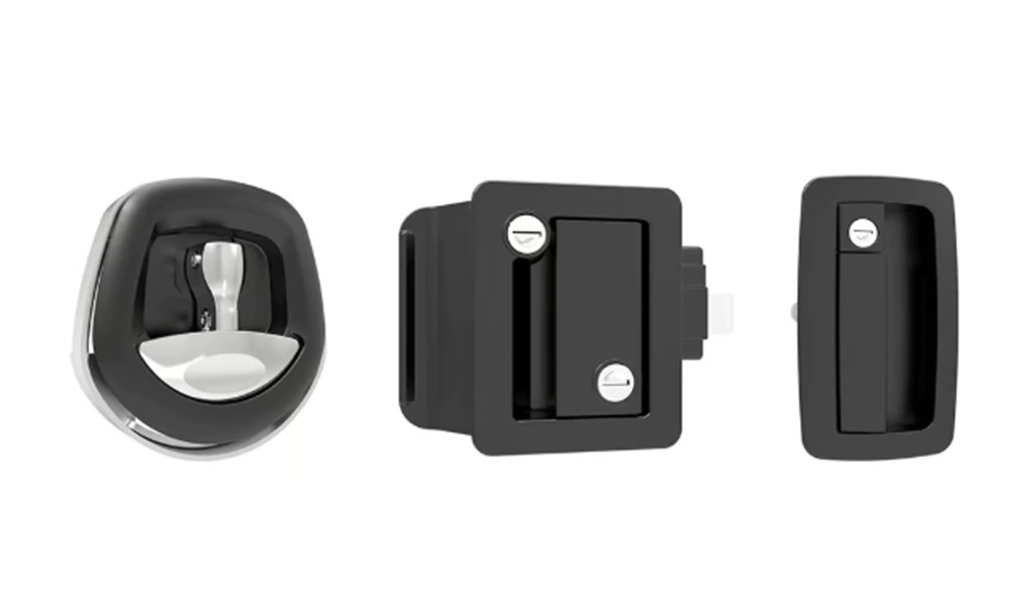
Flush Paddle / Trigger Latches: Sit nearly flush with the door surface to eliminate snag hazards on commercial vehicles, utility trailers, and narrow walkways.
Tool-Operated (Slotted, Hex, Square, Triangle): Prevents casual tampering on public utility boxes and electrical switchgear while allowing technicians quick entry.
Key-Locking Cylinders (CH751, Tubular, or High-Security Cam): Essential for sensitive telecom cabinets, server racks, and outdoor power distribution units.
E. Load Rating & Vibration Resistance
In high-vibration environments—such as rail transit, agricultural machinery, off-road vehicles, and backup diesel generators—standard latches can vibrate loose over time. Look for:
Over-Center Locking Geometry: Locks the lever mechanically past center so vibration cannot back-drive the handle open.
Working Load vs. Ultimate Load: Verify that the latch’s continuous working load rating comfortably exceeds the back-pressure exerted by your compressed door gasket plus external wind or shock loads.
F. Mounting Profile & Cutout Preparation
Single-Hole Round Cutout: Fast to punch on turret presses and simple to install with a rear mounting nut.
Rectangular Drop-In Cutout: Common for flush paddle and lever latches, offering anti-rotation stability and higher torsional strength.
3. Common Mistakes to Avoid When Specifying Latches
Over-Compressing the Gasket: Applying excessive pull-up force crushes closed-cell foam gaskets beyond their elastic limit, causing permanent compression set and leaks.
Ignoring Door Deflection on Tall Cabinets: On doors taller than 1,000 mm (40 inches), a single central compression latch allows the top and bottom corners to bow outward. Use multi-point compression latch systems with top-and-bottom connecting rods to maintain uniform seal pressure along the entire door height.
Mixing Dissimilar Metals: Installing a zinc-plated steel pawl directly onto an uncoated aluminum frame in wet environments accelerates galvanic corrosion. Always match compatible metals or isolate contact surfaces.
4. Partnering with Wenzhou CUYUE Lock Technology Co., Ltd.
Selecting the right latch is only half the equation—consistent manufacturing tolerances and reliable supply are equally vital for your production line. At Wenzhou CUYUE Lock Technology Co., Ltd., we specialize in industrial cabinet locks, hinges, and handles engineered for demanding B2B enclosure applications.
End-to-End In-House Capabilities: Our dedicated R&D and engineering team manages every stage under one roof—from 3D CAD design and precision tooling development to stamping, CNC machining, die-casting, surface finishing, and final assembly.
Strict Laboratory Validation: Every compression latch series undergoes rigorous cycle endurance testing, tensile pull-load verification, and neutral salt spray corrosion testing (ASTM B117) to ensure dependable field performance.
Custom OEM/ODM Solutions & Cost Control: Whether you need a custom pawl offset, specialized shaft length, laser-engraved branding, or a complete multi-point latching assembly, our integrated manufacturing model delivers fast lead times and competitive factory-direct pricing.
Looking for technical drawings, sample kits, or custom engineering support for your next enclosure project? Contact the CUYUE engineering team to find the exact compression latch solution tailored to your specifications.