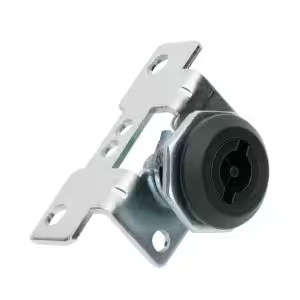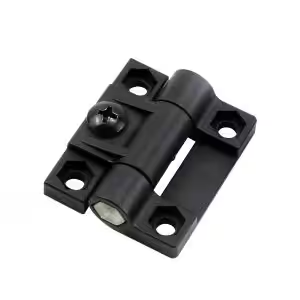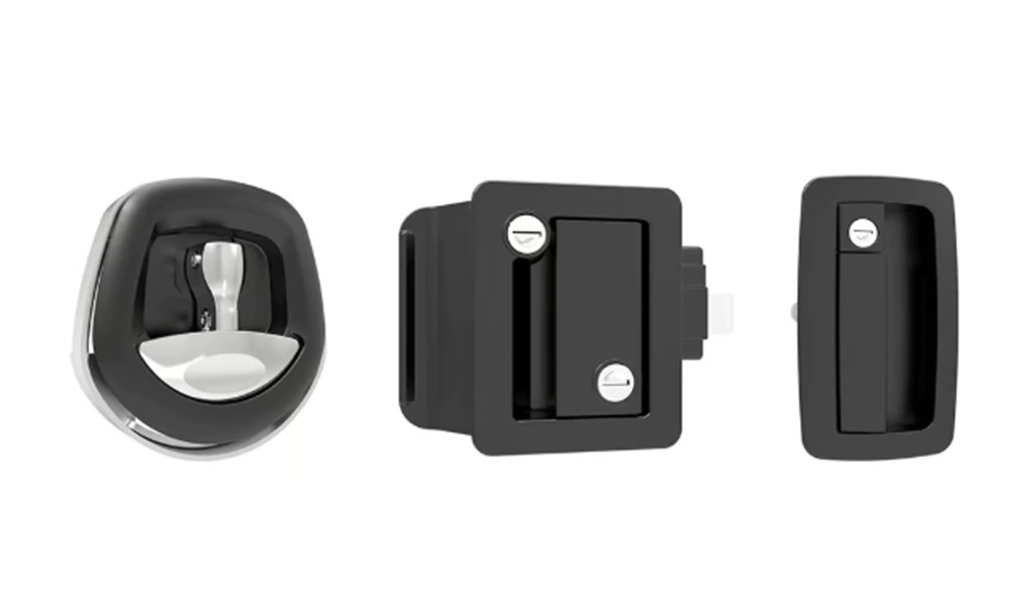
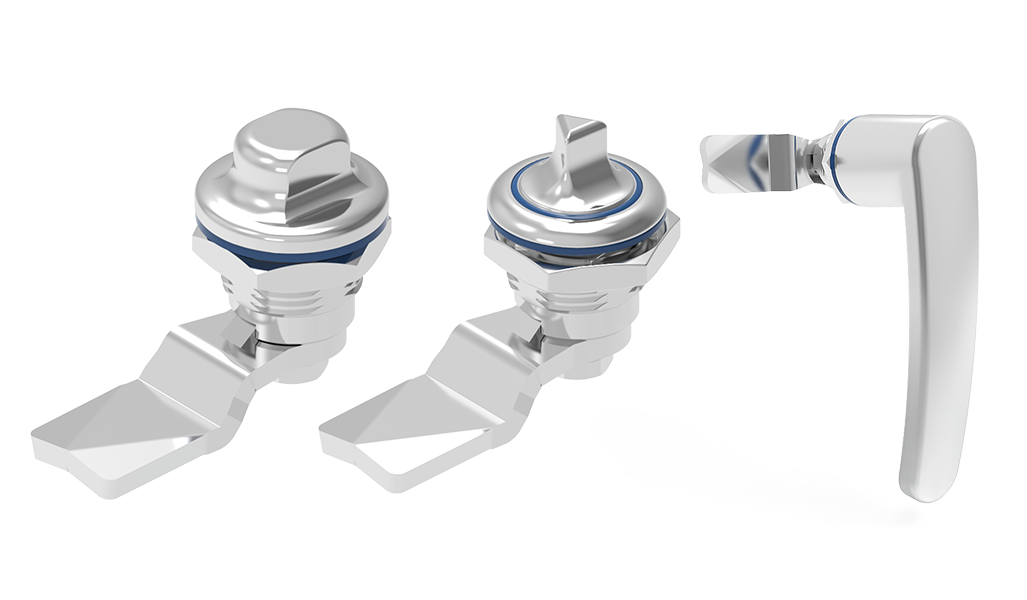





A spring-loaded button meets a receiver — that’s how does a button catch work on cabinet doors. Learn the mechanism, installation logic, and how to spec the right catch.
Cabinet doors that swing open unprompted, rattle under vibration, or wear out their hardware after a few thousand cycles — these are not minor annoyances. In residential cabinetry, they frustrate end users. In industrial enclosures and commercial furniture, they become maintenance liabilities. The fix is often simpler than people expect: a properly specified button catch.
So what is a button catch, exactly? It is a two-part latching device consisting of a spring-loaded button element and a receiver housing, designed to hold a door closed through mechanical engagement until deliberate pressure releases it. No magnetism. No friction dependence. Just a spring doing its job, cycle after cycle.
At Cuyue, we manufacture and supply button catches across furniture, shutter, and industrial enclosure applications. That daily production context is what informs everything below — the mechanism, the installation logic, and the comparison against magnetic alternatives.
What Exactly Is a Button Catch, and How Is It Built?
A button catch is a two-part mechanical fastener — one spring-loaded button element mounted on the door, and one receiver housing mounted on the frame — that holds a cabinet door shut through spring tension and snaps open when the button is deliberately pressed.
The button element itself is a small cylindrical or dome-shaped protrusion, typically 8mm to 15mm in diameter, spring-loaded from behind. When the door closes, this element compresses slightly and then seats into the receiver. Material selection matters here: zinc alloy covers most cost-sensitive furniture applications, while brass and nickel-plated steel are chosen where corrosion resistance or load-cycle durability is the priority.
The receiver housing is a recessed or surface-mounted socket with an inner geometry — usually a tapered or lipped channel — that grips the button once seated. The geometry is what creates holding force; the button must be pushed inward to disengage from that lip.
The spring is the critical component. A small compression spring behind the button provides both the snap-in engagement force and the resistance the user feels when releasing. Spring tension rating directly determines how firmly the door holds. At Cuyue, we rate our furniture-grade springs for 50,000+ open/close cycles without measurable force degradation — because a catch that loosens over time is not a catch worth specifying.
One clarification worth making: “button catch” refers specifically to this push-to-release hardware category. It is not a roller catch, not a touch-latch, and certainly not a garment button. The naming occasionally confuses first-time specifiers.
How Does a Button Catch Actually Work When a Door Closes?
When a cabinet door swings shut, the button element contacts the receiver’s tapered entry, compresses against its spring, rides over the lip, and locks into the seated position — releasing only when someone pushes the button inward to disengage the spring tension and pull the door open.
The engagement sequence breaks down into four distinct moments. First, as the door approaches the frame, the button tip contacts the angled lead-in surface of the receiver. That angle converts the door’s closing momentum into inward compression force on the button — a cam action that requires no alignment precision from the user. Second, the button compresses against spring resistance and clears the receiver lip. Third, the spring pushes the button outward into the seated recess, producing the audible and tactile click that confirms engagement. Fourth, spring tension now holds the button against the receiver walls; the door is latched.
Release is the reverse: the user presses the button inward, overcoming spring tension, retracting the button below the receiver lip, and the door swings free. The spring immediately resets the button to its extended position, ready for the next close cycle.
What makes this mechanically significant is that the holding force is entirely spring-dependent. It does not rely on magnetic field strength, surface contact area, or friction between door and frame surfaces. This means performance stays consistent regardless of door material — wood, MDF, powder-coated metal, or glass-fronted frames all behave the same way. It also means temperature fluctuations do not affect holding force, which matters in environments near HVAC systems or exterior-facing installations.
At Cuyue, we engineer the spring compression curve so the engagement feels deliberate but not stiff — a balance that matters especially in high-frequency access applications like kitchen cabinetry or industrial panel doors accessed dozens of times per shift.
How Should a Button Catch Be Installed on a Cabinet Door?
Installing a button catch correctly requires precise alignment between the button element on the door panel and the receiver on the cabinet frame — even a 1–2mm misalignment can prevent full engagement or cause premature spring wear.
The process is straightforward when approached in sequence. Mount the receiver housing first, attaching it to the cabinet frame at the desired catch point using the supplied pan-head screws. Ensure it sits flush or at the specified recess depth — a proud receiver will cause the button to skim the edge rather than seat cleanly.
Next, mark the button position. Close the door gently against the mounted receiver; the button element should transfer a contact impression onto the door face. Use that mark as the drill or mount center. For recessed button types, drill to the specified depth before seating — minimum wall thickness for recessed installation is typically 12–13mm, so verify panel thickness before ordering.
Mount the button element, then test by closing the door slowly. Listen and feel for the click. If the button skims the receiver edge without seating, adjust lateral position in 0.5–1mm increments rather than forcing the door closed repeatedly.
Common installation errors worth avoiding:
| Error | What Goes Wrong | Fix |
| Button mounted too deep | Never reaches receiver, door stays unlatched | Re-drill at correct depth |
| Over-tightened screws | Housing distorts, spring binds | Back off to snug, not torqued |
| Mismatched button/receiver pair | Button OD doesn’t match receiver ID | Verify spec sheet before ordering |
| Receiver not flush | Button skims edge, no click | Recess or shim receiver to flush |
Is a Button Catch or Magnetic Catch Better for Cabinet Doors?
A button catch outperforms a magnetic catch in applications that demand defined holding force, resistance to vibration, or a positive tactile release — while magnetic catches suit lightweight doors where touch-open convenience is the priority.
When comparing button catch vs magnetic catch for cabinet doors, the decision comes down to use-case specifics, not a universal winner.
| Factor | Button Catch | Magnetic Catch |
| Holding mechanism | Spring tension (mechanical) | Magnetic attraction |
| Release method | Push-to-release (active) | Pull-to-open (passive) |
| Holding force consistency | Fixed by spring spec | Varies with door gap distance |
| Vibration resistance | High | Low–Medium |
| Door material compatibility | Any | Requires magnetic strike plate |
| Typical application | Kitchen cabinets, shutters, enclosures | Light furniture, display cases |
| Cycle durability | Very high (spring-dependent) | High (no moving parts) |
Choose a button catch when the door faces vibration — near HVAC equipment, machinery, or high-traffic corridors — or when a positive “locked” feel is required by the end user or safety specification. Choose a magnetic catch when soft-close or handle-free opening is preferred and door weight is under approximately 2kg in a stable environment.
The button catch vs magnetic catch for cabinet doors question comes up frequently in our specification conversations. For industrial enclosures and commercial cabinetry, we consistently recommend button catches because spring-based engagement does not degrade with heat, humidity, or proximity to metal-dense environments that can interfere with magnetic field strength over time.
What Should You Look for When Specifying a Button Catch?
When specifying a button catch for cabinet doors, the three variables that matter most are spring force rating, button diameter relative to door thickness, and material finish — getting any one of these wrong leads to either a door that won’t stay closed or a catch that fails prematurely.
Spring force should be specified in Newtons or pounds-force, not described as “standard.” Light-duty applications like small kitchen cabinet doors need lower spring tension for comfortable daily use; heavy-duty applications like plantation shutters on French doors or industrial panel enclosures need a stiffer spring to resist air pressure differentials and vibration loads.
Button diameter and travel depth must match the door panel thickness. A button specified for a 18mm panel will not function correctly in a 12mm door. For recessed types, confirm minimum wall thickness before finalizing the order.
Material and finish selection should reflect the installation environment: zinc alloy for cost-efficient interior furniture, brass or stainless steel for humid or corrosive environments, nickel or chrome plating for aesthetically prominent applications where the catch is visible in the closed position.
For procurement at volume, custom spring tension curves, non-standard finishes, and modified button diameters are all achievable. Cuyue handles custom specification requests regularly — from modified spring rates for unusual door weights to proprietary finishes for branded furniture lines.
A button catch’s reliability comes entirely from the precision of its spring-and-receiver geometry. Understanding that mechanism makes installation straightforward, specification decisions defensible, and troubleshooting fast.
FAQ
What is a button catch, and how is it different from other cabinet catches?
A button catch is a spring-loaded two-part fastener where a button element snaps into a receiver housing to hold a door closed, releasing only when the button is pressed. Unlike roller catches or friction catches, it provides a positive mechanical engagement with a distinct click, making it more reliable under vibration or repeated use.
Can a button catch be used on doors that open frequently throughout the day?
Yes. Quality button catches are rated for tens of thousands of open/close cycles. The key is selecting a catch with a spring steel rated for high-cycle fatigue resistance — the standard Cuyue applies across our hardware line is 50,000+ cycles without spring force degradation.
How do I know if my button catch spring tension is too strong or too weak?
If the door requires noticeable force beyond a deliberate push to open, the spring tension is likely too high. If the door pops open under mild vibration or air pressure changes, the tension is too low. Spring force should match door weight and access frequency — contact Cuyue for guidance on the right spec for your application.
Does a button catch work on overlay cabinet doors as well as inset doors?
Yes, but the mounting configuration differs. Inset doors allow the receiver to mount flush on the inner frame edge. Overlay doors may require an offset receiver or surface-mount configuration to ensure the button and receiver align correctly when the door is in the closed position.
Can I get button catches in custom finishes or with custom spring tension for a large order?
Absolutely. Cuyue regularly fulfills custom orders specifying non-standard finishes, modified spring tension curves, and custom button diameters.