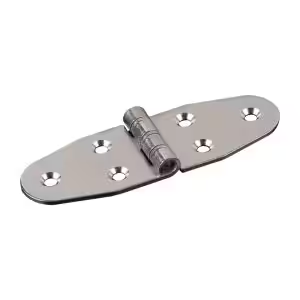
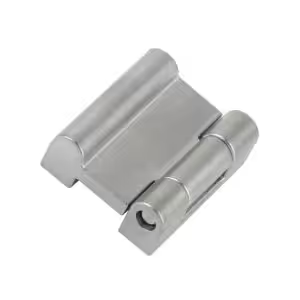
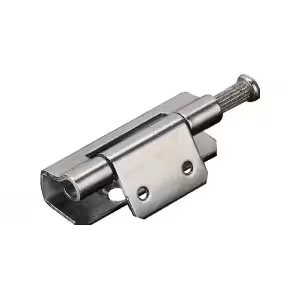
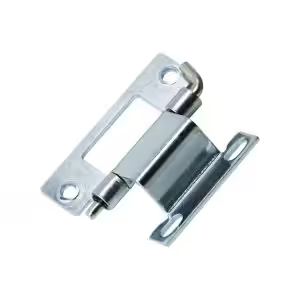
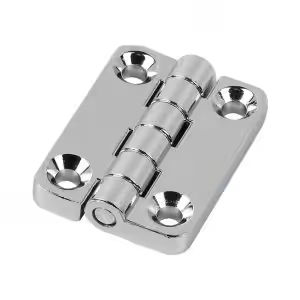
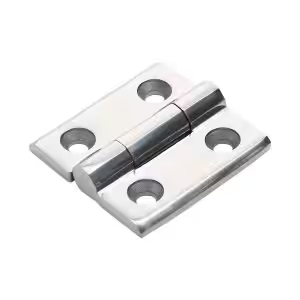
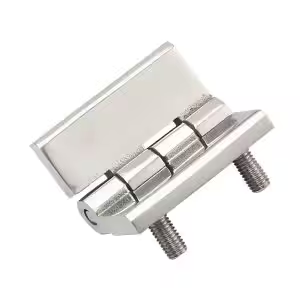
Generic “heavy-duty” hinges fail where it matters most. Learn why certified load rated surface mount hinges for industrial blast doors are critical to compliant, structurally sound specifications.
A blast door can be engineered to withstand tens of thousands of pounds of overpressure, yet its entire structural integrity depends on three to six hinge points. Most procurement failures in this category don’t come from the door panel itself — they come from specifying a generic heavy-duty surface mount hinge that carries no verified load rating for dynamic impulse forces. At ForndLock, we’ve worked with enough defense contractors and industrial facility teams to know that the gap between “heavy duty” marketing language and actual certified load data is exactly where projects get into serious trouble. This article addresses that gap directly, from the physics of blast loading through to the documentation your procurement team needs to close out a compliant specification.
What Makes a Blast Door Hinge Fundamentally Different From a Standard Heavy Duty Hinge?
A standard heavy-duty surface mount hinge is rated for static dead load — the door’s resting weight — while a blast door application demands a hinge certified for dynamic radial and axial impulse loads that can spike to multiples of the door’s static weight within milliseconds.
That distinction is not a fine-print technicality. It is the entire basis for why load rated surface mount hinges for industrial blast doors represent a separate product category, not a heavier version of a commercial door hinge.
Why Does Blast Overpressure Change the Load Equation Entirely?
Blast overpressure creates a dynamic impulse load that is fundamentally different from static weight — the force is instantaneous, multi-directional, and can exceed the door’s rated static load by a factor of three to ten depending on the pressure wave profile.
In normal door operation, the hinge experiences a predictable vertical radial load equal to a fraction of the door’s total weight, applied gradually and consistently every time the door opens or closes. A blast event replaces that predictable loading with peak reflected overpressure that arrives as a shock wave, translating into shear and bending forces at the hinge mounting points that act simultaneously in multiple directions. A hinge rated to support 10,000 lbs of door weight under static conditions can still fail catastrophically under a 5 psi blast wave, because the force direction, the rate of load application, and the impulse duration are entirely different from anything the hinge was tested against.
The surface mount configuration adds another layer of complexity. In a bolt-on surface mount hinge, the dynamic load transfers through the bolt pattern into the door frame skin. Under static loading, this is predictable and manageable. Under blast impulse, the instantaneous load spike can introduce peel forces at the hinge leaf perimeter that bolt-on designs must be specifically engineered to resist. When we at ForndLock reviewed a project where a defense contractor had specified a blast-rated door panel paired with unrated commercial hinges, the load analysis showed that the hinge mounting interface — not the panel — would have been the first point of failure under the facility’s design overpressure. The specification was changed entirely before fabrication began.
Is “Heavy Duty” a Load Rating or Just a Marketing Term?
In most commercial hinge catalogs, “heavy duty” describes construction quality — plate thickness, material grade, bearing type — but it does not constitute a certified load rating unless the manufacturer provides documented test data for both static and dynamic load conditions.
A proper load rating certificate for blast door service should include the static radial load capacity, the dynamic impulse test method used, the safety factor applied to the tested value, and the test standard or methodology referenced. Without all four of those elements, a catalog number is a description, not a specification. In defense and energy sector facilities, blast-rated door assemblies are routinely required to include hinge load documentation as part of the complete door assembly certification package — a standalone product datasheet with a weight capacity number does not satisfy that requirement.
How Do You Calculate the Correct Load Rating for Your Blast Door Hinges?
The correct hinge load rating for a blast door starts with three inputs: the door’s total weight, the design overpressure level the door must survive, and the hinge quantity and spacing — these three variables together determine the minimum radial load capacity each hinge must carry under both static and dynamic conditions.
Knowing how to select load rated heavy duty hinges for oversized steel doors begins with running this calculation before any product is sourced, not after.
What Is the Step-by-Step Load Calculation Process?
Begin with the door’s dead weight divided by the number of hinges to establish static load per hinge, then apply a dynamic load multiplier based on the facility’s design overpressure specification — for most industrial blast door applications, this multiplier ranges from 3x to 8x the static value.
The process works as follows:
Step 1 — Establish total door dead weight, including integrated seals, locking mechanisms, and any embedded hardware. A common error is calculating panel weight only and omitting hardware mass.
Step 2 — Determine hinge count and vertical spacing. For oversized steel doors exceeding 1,000 lbs, three hinges distribute load more safely than two. Four hinges are recommended for doors above 2,500 lbs or those subject to high overpressure design loads, because additional hinge points reduce the moment arm each individual hinge must resist.
Step 3 — Calculate static radial load per hinge: total door weight divided by number of hinges.
Step 4 — Apply a dynamic multiplier based on the facility’s overpressure design class. Low overpressure applications typically use a multiplier of 3x to 4x. Medium overpressure applications commonly use 5x to 6x. High overpressure applications may require 7x to 10x, depending on the pressure wave profile and door geometry.
Step 5 — Apply a safety factor of 1.5x to 2x to the calculated peak dynamic load. This accounts for variability in actual blast wave behavior and manufacturing tolerances.
To make this concrete: a 2,500 lb steel blast door hung on four hinges carries a static radial load of 625 lbs per hinge. Applying a medium overpressure multiplier of 5x produces a dynamic load of 3,125 lbs per hinge. Applying a 2x safety factor pushes the minimum certified load rating to 6,250 lbs per hinge. That is the number that must appear on the hinge manufacturer’s load documentation — not a catalog description of “heavy duty” construction.
Does Door Size and Leaf Thickness Affect Hinge Selection Beyond Load Rating?
Yes — for oversized steel doors, leaf thickness and footprint area directly affect how load is distributed across the mounting surface, and undersized hinge leaves can cause localized stress concentration at bolt holes even when the hinge’s rated load capacity appears sufficient on paper.
For doors above 1,500 lbs, ForndLock’s internal manufacturing standards call for hinge leaf thickness sufficient to prevent flexure under dynamic loading — thin leaves that meet a load rating under controlled test conditions can still deform at bolt hole locations when subjected to off-axis impulse forces in real installations. Bolt pattern spacing and edge distance from the door skin perimeter are equally critical. A hinge leaf that is correctly rated but undersized for the door’s skin thickness will concentrate stress at the outermost fasteners, creating a progressive failure mode that begins at the mounting interface rather than at the hinge pin.
| Door Weight Range | Recommended Hinge Count | Min. Load Rating Per Hinge (5x multiplier, 2x SF) | Suggested Leaf Configuration |
| 500 – 1,000 lbs | 3 | 1,667 lbs | Standard heavy-duty plate |
| 1,000 – 2,500 lbs | 3 – 4 | 4,167 lbs | Reinforced plate, extended bolt pattern |
| 2,500 – 5,000 lbs | 4 | 6,250 – 12,500 lbs | Heavy structural plate, weld-on preferred |
| 5,000 lbs+ | 4 – 6 | Custom calculation required | A36 structural plate, weld-on |
Which Materials and Bearing Designs Actually Survive Industrial Blast Conditions?
For industrial blast door applications, the hinge material must provide both the tensile strength to absorb dynamic impulse loads and the environmental resistance to survive the facility’s operating conditions — in most cases this means high-carbon steel or A36 structural plate for maximum load capacity, with 316 stainless steel as the preferred choice where corrosive atmospheres are also present.
Why Does Bearing Type Matter Under Dynamic Loading?
Under the sudden shock of a blast impulse, standard pin-and-barrel hinges experience metal-to-metal impact at the knuckle interface, which causes accelerated wear and potential deformation — thrust bearings or bronze bushing designs absorb this shock more effectively and maintain dimensional stability after the event.
Plain pin hinges are adequate for static-load commercial applications but are not appropriate for blast door service. Bronze bushing designs provide significant improvement by introducing a sacrificial wear surface that absorbs impact energy at the knuckle. Thrust bearings handle vertical shock loads particularly well, which is relevant for heavy blast doors where the impulse has a significant vertical component in addition to the primary horizontal pressure wave. Sealed bearing designs offer the additional advantage of excluding blast-generated debris, pressure-driven contamination, and particulate matter from the bearing interface — a practical concern in industrial blast events that is often overlooked at the specification stage.
At ForndLock, our bearing selection for high-load dynamic applications is driven by the combination of overpressure class and door weight. Based on internal testing observations on bearing wear after simulated dynamic load cycles, we specify bronze bushing designs as the minimum for medium overpressure applications and sealed thrust bearing configurations for high overpressure or high door weight combinations.
Is Corrosion Resistance a Separate Specification From Load Capacity?
Yes — corrosion resistance and structural load capacity are independent specifications, and selecting a hinge based on one without verifying the other is a common specification error in industrial blast door projects, particularly in facilities with chemical, marine, or high-humidity environments.
| Material | Typical Max Load Rating Range | Corrosion Resistance Class | Recommended Blast Door Environment |
| Carbon Steel (coated) | Very high | Low | Interior, climate-controlled industrial |
| A36 Structural Plate | Extreme | Low | Extreme load applications, interior only |
| 304 Stainless Steel | High | Moderate-High | Standard industrial exterior |
| 316 Stainless Steel | High | Extreme | Marine, chemical, coastal military |
Surface finish and coating choices interact with base material performance in ways that matter for blast door service. Hot-dip galvanizing on carbon steel provides durable corrosion protection but adds dimensional thickness that must be accounted for in the hinge leaf fit-up. High-build epoxy coatings offer good protection for interior blast door applications where the primary concern is humidity rather than direct chemical exposure. For offshore platforms, chemical processing facilities, and coastal military installations, 316 stainless steel with a passivated finish is the specification we recommend as a starting point, with load capacity verified against the project’s specific overpressure calculation.
What Are the Critical Installation Requirements for Load Rated Surface Mount Hinges on Steel Blast Doors?
A correctly specified load rated surface mount hinge will underperform or fail prematurely if the installation does not match the hinge’s tested mounting configuration — specifically, the bolt grade, bolt pattern, torque specification, and substrate material must all align with the conditions under which the load rating was established.
Bolt grade is the most frequently under-specified element in blast door hinge installations. Grade 5 or Grade 8 hardware is typically required for blast door hinge mounting; standard commercial fasteners will yield under dynamic impulse loading even when the hinge itself is correctly rated. The fastener becomes the weakest link in the load path, and because fastener failure is progressive rather than instantaneous, it may not be visible during routine inspection.
Substrate preparation for surface mount application on heavy steel doors requires flatness tolerance control and adequate surface finish. Gaps between the hinge leaf and door skin — even small ones — reduce effective load transfer by concentrating stress at the contact perimeter rather than distributing it uniformly across the full leaf footprint. For weld-on configurations, weld procedure qualification applies, and the weld must be sized and specified to match the hinge’s dynamic load rating, not just its static capacity.
Hinge spacing and vertical positioning follow different rules for blast doors than for standard commercial doors. The geometry of hinge placement directly affects the moment arm calculation for the door panel under lateral blast loading, which means top and bottom hinge placement must be determined from the structural analysis of the door assembly, not from standard commercial installation practice.
We encountered exactly this issue on a project where the specified hinge was correctly rated but the installation contractor used Grade 2 fasteners from a standard hardware package. During pre-acceptance review, the discrepancy was identified through torque verification and fastener marking inspection. The installation was corrected before the door assembly was accepted — a straightforward fix at that stage, but a potential structural failure if it had been missed.
How Should Engineering Teams Document and Specify Load Rated Blast Door Hinges for Procurement?
A complete blast door hinge specification for procurement should include five documented items: the certified static radial load rating, the dynamic load test method and result, the material grade and finish specification, the mounting configuration (surface mount, weld-on, or hybrid), and the manufacturer’s safety factor declaration.
When evaluating manufacturer load rating claims, ask for test reports rather than catalog numbers. There is a meaningful difference between a hinge that is described as rated and one that has been tested to a documented method with traceable results. In defense procurement contexts, blast-rated door assemblies typically require hinge load documentation traceable to the door assembly’s structural analysis — a standalone product datasheet does not satisfy that traceability requirement.
Common specification errors in this category include specifying a load rating without requiring dynamic test data, omitting mounting configuration requirements from the RFQ, and failing to specify the required safety factor. Each of these omissions creates an opening for a supplier to provide a product that technically meets the stated specification while being entirely unsuitable for the actual application.
At ForndLock, we support engineering teams through this process with custom load calculations based on door assembly drawings, material certifications traceable to heat and lot, and sample hinge packages for pre-approval testing before production quantities are committed. Understanding how to select load rated heavy duty hinges for oversized steel doors is not just a product question — it is a documentation and process question, and we treat it as both.
What Are the Most Common Questions About Blast Door Hinge Specifications?
The questions we receive most often from engineering and procurement teams center on load calculation methodology, material selection for specific environments, and what documentation is required to support a blast door hinge specification.
Is there a minimum number of hinges required for a blast-rated steel door?
There is no universal standard that mandates a specific hinge count, but structural best practice for blast doors above 1,000 lbs typically calls for a minimum of three load rated surface mount hinges, with four or more recommended for doors exceeding 2,500 lbs or those subject to high overpressure design loads.
Can load rated heavy duty surface mount hinges be retrofitted onto existing blast door frames?
Yes — the surface mount design is one of the primary advantages for retrofit applications, as it does not require frame mortising or structural modification. However, the existing frame substrate must be verified to support the bolt pattern and load transfer requirements of the rated hinge before installation proceeds.
What is the difference between radial load rating and axial load rating on a blast door hinge?
Radial load refers to force perpendicular to the hinge pin axis — essentially the door’s weight and lateral blast forces. Axial load refers to force along the pin axis — vertical thrust generated during door movement or from angled blast impulse. Both values must be reviewed when specifying hinges for blast door applications.
Does ForndLock manufacture custom load rated hinges for non-standard blast door dimensions?
Yes — we regularly manufacture custom surface mount hinges to project-specific load ratings, leaf dimensions, bolt patterns, and material grades. Custom projects begin with a technical review of the door assembly drawing and overpressure design specification.
What surface finish is recommended for blast door hinges in high-humidity industrial environments?
For high-humidity industrial environments, we recommend 316 stainless steel as the base material with a passivated or electropolished finish. Where carbon steel is required for maximum load capacity, hot-dip galvanizing or a high-build epoxy coating provides the most durable corrosion protection available within that material class.
The hinge is not a commodity component on a blast door. It is a load-bearing structural element that requires the same specification rigor as the door panel itself. Generic “heavy duty” catalog hinges are not a substitute for certified load rated surface mount hinges when the application involves dynamic overpressure events, oversized steel panels, or compliance-driven procurement — and the consequences of that substitution are not discovered until an overpressure event makes them impossible to ignore.
If you are working on a blast door project and need load calculation support, material recommendations, or a custom hinge specification, send your project requirements, door drawings, or RFQ details directly to info@forndlock.com. Our engineering team will review your specifications and respond with a tailored recommendation, material certification options, or a sample arrangement for pre-approval testing.